Psychedelics Education
Mush Spores
Oct
Mush Spores: Understanding Species, Safety, and Common Questions
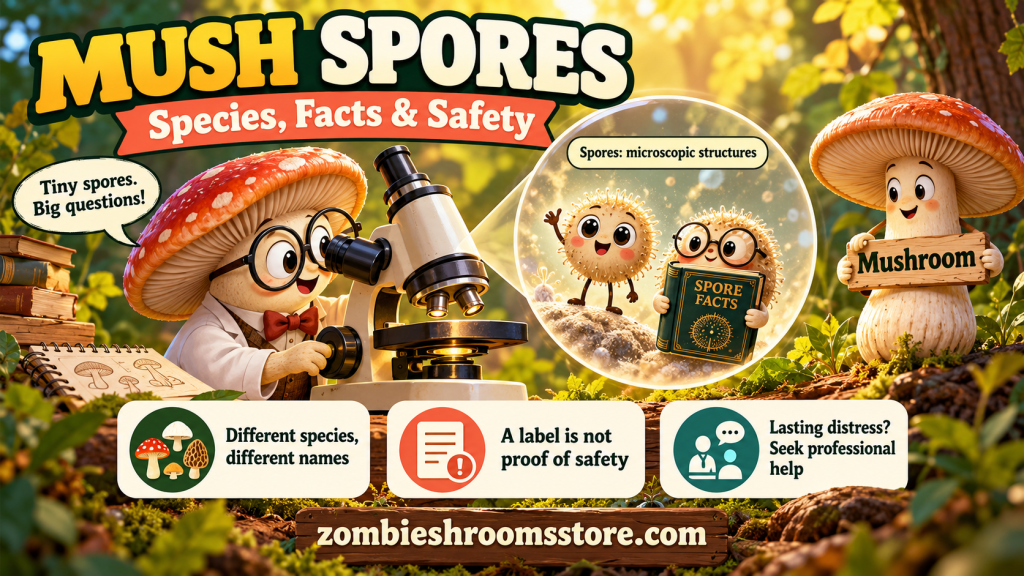
Mush spores is an informal phrase for mushroom spores—the microscopic reproductive structures produced by fungi. People searching this term may be interested in biology, species identification, or the terminology surrounding psilocybin-containing mushrooms.
Those subjects require clear distinctions. Spores are not the same as a mature mushroom, a prepared product, or a clinical psilocybin intervention. Information about one category should not automatically be applied to another.
Some searches also combine spores with questions about difficult psychedelic experiences. Understanding those experiences requires health information, rather than assumptions based on a species name.
This guide explains the basic terminology, clarifies references to Psilocybe azurescens and Psilocybe cyanescens, and examines bad-trip symptoms and possible after-effects. It provides educational context without cultivation instructions or claims that any species guarantees a safe experience.
What Are Mush Spores?
Spores are reproductive structures involved in fungal life cycles. They are microscopic and should be distinguished from the visible fruiting body commonly called a mushroom.
They are also different from mycelium, the network of fungal filaments that forms another stage of fungal development.
That distinction is useful when reading descriptions online. A page discussing spores may concern microscopy or biological classification. A page discussing whole mushrooms addresses different material and potentially different risks.
The wording matters because “mushroom” can refer broadly to culinary foods, supplements, psychoactive species, or unidentified wild specimens. Always establish which organism and material an article actually describes.
Understanding mush spores begins with distinguishing reproductive structures from other fungal material.
Why Scientific Names Matter
Informal names can be ambiguous. Scientific names help distinguish organisms that might otherwise be grouped together.
However, a name printed on a label does not independently verify the material’s identity. Reliable identification may involve microscopic examination, other biological characteristics, and appropriately interpreted DNA evidence.
Published work on Psilocybe reference materials uses microscopy and DNA identification to examine species. That approach illustrates why identification involves more than recognizing a familiar name or photograph. Oxford Academic
Understanding Azurescens and Cyanescens
Searches for azurescens spores usually refer to Psilocybe azurescens. Searches for cyanescens spores may refer to Psilocybe cyanescens, but the full genus should be checked rather than assumed.
These are distinct species names. They should not be treated as interchangeable with named Psilocybe cubensis varieties.
Research on reference materials has examined both species using microscopic features and DNA identification. Such work concerns biological and chemical characterization; it does not establish that either name predicts a person’s experience. Oxford Academic
| Term | What it describes |
|---|---|
| Spores | Microscopic reproductive structures |
| Mycelium | A network of fungal filaments |
| Fruiting body | The structure commonly recognized as a mushroom |
| Species name | A biological classification |
| Variety label | A designation that may refer to a selected line |
| Clinical preparation | Material defined for a particular research intervention |
These distinctions help prevent biological information from becoming an unsupported medical claim.
Names Do Not Predict Effects
A species designation does not provide a complete description of a prepared product or its contents.
Likewise, discussing mush spores does not establish the chemical composition of mature material associated with that species. Evidence must match the material being examined.
A photograph cannot confirm what someone consumed. A product name cannot explain an unexpected reaction without further information.
For broader context on naming conventions, read the B+ background and research article on zombieshroomsstore.com. Its central distinction also applies here: names organize discussions, while identification and testing answer more specific questions.
Can You Have a Bad Trip on Mushrooms?
Yes. Psilocybin-containing mushrooms can produce frightening or distressing experiences.
The expression “bad mushroom trip” generally refers to an unpleasant acute experience involving psychological distress. “Bad shroom trip” is informal wording for the same general concern.
NCCIH describes experiences involving extreme fear, confusion, or panic, alongside possible physical adverse effects. An unpleasant reaction should not be dismissed simply because another person reported a positive experience. NCCIH
A calm explanation is more useful than judgment. Distress does not mean someone failed to approach the experience correctly, and no variety name guarantees protection from it.
Recognizing Common Symptoms
Bad-trip symptoms may include intense fear, anxiety, paranoia, confusion, or a sense of losing control.
Physical discomfort can occur alongside psychological distress. NCCIH lists possible adverse effects including nausea, headache, dizziness, and increases in heart rate or blood pressure. NCCIH
These symptoms are not a reliable way to identify the substance involved. Unknown products, other drugs, medical problems, and mushroom poisoning can complicate the situation.
Do not assume severe symptoms are harmless simply because someone describes them as a trip.
How Long Does a Bad Trip Last?
There is no universal duration.
Health Canada states that the acute effects of psilocybin-containing mushrooms usually last approximately four to six hours. That range describes typical effects, not a guaranteed endpoint for distress or a reason to delay medical help. Canada.ca
The question “how long does a bad trip last?” can refer to two different things: the acute drug experience or difficulties that continue afterward.
Those timelines should be separated. Someone may no longer feel acutely intoxicated but still experience anxiety, disrupted sleep, or emotional distress.
Unknown ingredients and combined substance use make a simple countdown even less reliable.
How LSD Fits Into the Discussion
A bad acid trip refers to a difficult experience involving LSD. LSD and psilocybin are different substances, so their timelines should not be assumed identical.
NIDA material describes LSD effects lasting as long as approximately 12 hours. nida.nih.gov
Neither estimate establishes how long every individual reaction will last. Persistent or worsening symptoms deserve assessment rather than reassurance based solely on a typical duration.
What Research Shows About After-Effects
Bad mushroom trip after-effects can extend beyond the acute experience.
A survey study asked 1,993 people about their most psychologically difficult psilocybin mushroom experience. It documented acute distress, potentially dangerous behavior, and enduring psychological problems in some respondents.
The study indexed on PubMed helps demonstrate that longer-lasting difficulties can occur. However, participants were specifically reporting their worst experiences, so its findings cannot establish the probability of harm for every person who uses psilocybin. PubMed
That limitation matters. A survey of selected experiences answers a different question from a representative population study or controlled clinical trial.
Persistent Difficulties Deserve Attention
Another study examined reports of long-term negative psychological responses to psychedelics. Its interviews explored factors including difficult experiences, prior vulnerabilities, and unsafe or complex environments. PubMed
These findings should not be used to diagnose someone from an article. They support taking persistent difficulties seriously.
Symptoms that interfere with sleep, work, relationships, or everyday functioning are reasonable grounds to seek professional assessment. A person does not need to prove that their experience was unusually severe before asking for help.
Responding to Distress
If someone is distressed, focus on immediate safety. Speak calmly, avoid confrontation, and keep them away from traffic, heights, and other hazards.
If it is safe to remain with them, avoid leaving a severely confused person alone. Do not give additional substances or someone else’s medication to try to stop the experience.
Describe the situation honestly to medical or poison specialists. Information about what may have been taken, when it happened, and the symptoms can help guide care.
Practical support is not a substitute for medical assessment when the person cannot remain safe or symptoms are severe.
When Emergency Help Is Needed
Call 911 if someone collapses, has a seizure, has trouble breathing, or cannot be awakened. These are emergency warning signs identified by Poison Control. Immediate danger to the person or others also requires urgent assistance. Your trusted resource
In the United States, call Poison Control at 1-800-222-1222 for suspected poisoning or an uncertain exposure. Its immediate-assistance guidance explains how to obtain expert advice. Poison Control
Outside the United States, contact your local poison service or emergency number.
Getting Support Afterward
Persistent anxiety, poor sleep, distressing memories, or perceptual changes should be discussed with a qualified healthcare professional.
Explain when the symptoms began, how they affect daily life, and what substances or products may have been involved. Honest information helps the clinician assess possibilities.
Avoid assuming that another psychedelic experience will resolve the problem. That would introduce a new exposure without establishing the cause of the existing symptoms.
Online accounts may help someone recognize that others have struggled, but they cannot determine a diagnosis. A clinician can evaluate symptoms and discuss appropriate care.
Reading Biological and Health Claims Carefully
Information about mush spores should make clear whether it concerns biology, microscopy, legal questions, or the effects of a psychoactive substance.
For general background on psilocybin, consult Health Canada’s overview. For another discussion of names and evidence, see the Huautla vs Golden Teacher article on zombieshroomsstore.com.
Legal status requires a separate, jurisdiction-specific assessment. A microscopy description or website listing should not be treated as universal permission to possess, transport, cultivate, or consume material.
When researching mush spores, check whether each source discusses identification, legal status, or health effects.
Frequently Asked Questions
1. Are spores the same as whole mushrooms?
No. Spores are microscopic reproductive structures, while the visible mushroom is a fruiting body. Information about one stage or material should not automatically be applied to another.
2. Are azurescens and cyanescens identical?
No. Psilocybe azurescens and Psilocybe cyanescens are distinct species. The full scientific name matters, and a label alone does not independently verify identity. Oxford Academic
3. Can a familiar species prevent a bad experience?
No name guarantees a positive response. Health, circumstances, substances, and individual reactions matter. Severe symptoms should be evaluated rather than dismissed based on reputation.
4. Does distress always end within six hours?
No. Typical acute-effect estimates do not guarantee recovery within that period. Distress can persist afterward, and severe or worsening symptoms warrant help sooner.
5. When should someone seek professional support?
Seek urgent help for emergency signs or immediate danger. Arrange professional assessment for persistent symptoms affecting sleep, functioning, relationships, or wellbeing. Asking for help does not require waiting a particular number of days.