
Psychedelics Education
Psilocybin Trafficking Charges in Canada: What the Okanagan Case Means for Buyers and Sellers
Oct
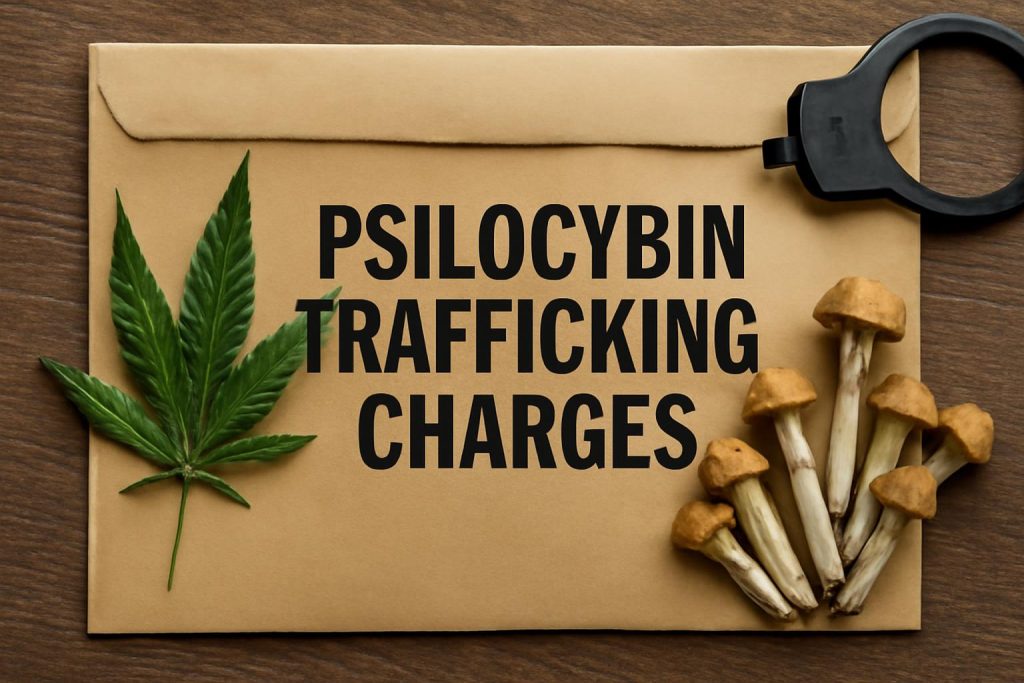
Psilocybin trafficking charges in Canada are receiving renewed attention after reports that an Okanagan man could become the first person in the country jailed for selling psilocybin alone. The case is important because it highlights a distinction many Canadians misunderstand: a substance can be widely discussed, researched, or openly marketed online without being legal to possess, distribute, or sell.
This article explains the broader legal and practical issues raised by the case. It is educational information, not legal advice. Canadian drug laws and court outcomes can change, and anyone facing an investigation or charge should speak with a qualified Canadian criminal lawyer.
Why the Okanagan case matters
Magic mushrooms have become more visible in Canada through clinical research, public discussion, wellness claims, and online storefronts. That visibility can create the impression that psilocybin has entered a legal grey market similar to cannabis before legalization. In law, however, visibility is not the same as authorization.
Reports about the Okanagan prosecution suggest that the central issue is commercial selling of psilocybin rather than a possession case involving personal use. That difference matters. Prosecutors generally treat conduct connected with supplying a controlled substance more seriously than simple possession, particularly when investigators allege repeated sales, advertising, organized activity, or financial benefit.
The case should not be interpreted as proof that every person who has possessed mushrooms will receive the same penalty. Canadian courts consider the facts of each matter, including the quantity involved, the accused person’s role, prior record, evidence of commercial activity, and whether there are aggravating or mitigating circumstances.
Is psilocybin a controlled substance in Canada?
In Canada, psilocybin and psilocin are controlled substances under the federal Controlled Drugs and Substances Act framework. In practical terms, unauthorized possession, production, trafficking, importing, exporting, or possession for the purpose of trafficking may expose a person to criminal liability.
That framework applies to the active compounds and to preparations containing them. It is not limited to a particular format. Dried mushrooms, capsules, chocolates, gummies, teas, extracts, and liquids may raise similar legal questions if they contain psilocybin or psilocin.
Product names can also be misleading. A package described as “microdose,” “wellness,” “functional mushroom,” or “psychedelic edible” is not automatically lawful. The legal analysis depends on what the product contains and how it was handled, not simply on the wording used in an advertisement.
Possession, trafficking, and possession for the purpose of trafficking
Simple possession
Possession generally refers to knowingly having control over a controlled substance. Physical possession is one possibility, but legal possession can also involve control over an item stored elsewhere or shared control with another person. The surrounding evidence is important.
For example, investigators may examine packaging, messages, payment records, statements, or the location where a substance was found. A small amount intended for personal use and a large quantity divided into sale-sized packages may lead to very different allegations, even though both involve possession.
Trafficking or selling
In Canadian criminal law, trafficking is broader than a street sale. Depending on the circumstances, it can include selling, administering, giving, transferring, transporting, or delivering a controlled substance. A person does not necessarily need to make a profit for conduct to be treated as trafficking.
That is why “I only shared it” is not a complete legal defence. Transferring a controlled substance to another person can create risk even when no money changes hands. The exact legal test depends on the charge and the evidence, so broad online claims should be treated cautiously.
Possession for the purpose of trafficking
Authorities may also allege that a person possessed psilocybin with the intention of supplying it to others. Evidence can include the amount found, multiple packages, scales, customer communications, advertising, records of orders, or proceeds. An allegation is not a conviction, but these details often shape how a case proceeds.
Why online mushroom stores can create confusion
Search results and social media can make psilocybin products appear easy to order in Canada. Some websites use age gates, health disclaimers, or professional-looking product pages. None of those features independently establish that a product is licensed or legal in a particular province.
Consumers should distinguish between a business operating publicly and a business operating under a federal authorization. A website may be accessible while still selling products that are not approved for general distribution. Similarly, a payment method, shipping promise, or customer review does not replace regulatory approval.
Even product categories can be unclear. Some stores list non-psychoactive mushroom products alongside cannabis, mushroom extracts, or psychedelic products. Before considering any item, read the ingredient information carefully, avoid assuming that a familiar format is safe, and confirm the rules that apply where you live.
For general orientation, visitors can review the Zombie Shrooms Store home page and examine how different product formats are presented. The store’s product index and product category index may also help readers distinguish between dried mushrooms, edibles, capsules, teas, and other listed formats. These pages should not be treated as proof that a product is legal in every Canadian jurisdiction.
What Health Canada authorization actually means
Canada has limited legal pathways for psilocybin access. These can include authorized clinical trials, certain research activities, and individual exemptions or other permissions granted under federal law. Those pathways are controlled and do not create a general retail market for recreational psilocybin.
A clinical trial is not the same as a dispensary. Participants are screened, products are controlled, dosing is documented, and the study operates under an approved protocol. An individual exemption is also specific to the person and circumstances approved. It does not automatically authorize resale, gifting, advertising, or commercial distribution.
This distinction is especially important when evaluating claims that a supplier is “approved,” “medical,” or “research-based.” Ask what authorization exists, which organization issued it, what activities it covers, and whether it applies to the particular product. Vague references to research or Health Canada should not be accepted without verification.
How buyers may be affected by enforcement
News coverage often focuses on sellers, but buyers can also face risks. Purchasing an illegal product may expose a person to possession allegations, financial loss, privacy concerns, counterfeit products, or an unsafe substance. Ordering across provincial or international borders can create additional customs and import issues.
There are also health risks separate from criminal law. Unregulated gummies and chocolates may contain undisclosed ingredients, inconsistent amounts, or substances other than psilocybin. A label that says “mushroom blend” does not tell you whether the product contains a psychedelic compound, a non-psychoactive extract, an analogue, or no meaningful mushroom ingredient at all.
Canadians should be particularly cautious about mixing psilocybin with alcohol, cannabis, stimulants, or prescription medicines. People with a personal or family history of psychosis, bipolar disorder, or certain cardiovascular conditions may face heightened risks. If someone experiences severe confusion, chest pain, seizures, dangerous agitation, or loss of consciousness, call emergency services rather than relying on online advice.
What sellers should understand
Operating a website, accepting e-transfers, using delivery services, or describing products as “for research” does not by itself make commercial distribution lawful. Repeated transactions can create a paper trail, and digital communications may become relevant in an investigation.
Sellers should not assume that removing the word “psilocybin” from a product page eliminates legal risk. Nor does calling a product a gift, donation, sample, or membership necessarily change the underlying conduct. If a controlled substance is being transferred in exchange for money or another benefit, the arrangement may attract scrutiny.
Anyone considering a psychedelic business in Canada should obtain specialized legal and regulatory advice before advertising, importing, manufacturing, packaging, or selling products. The consequences of relying on informal interpretations can be substantial.
What this case does not prove
- It does not prove that every mushroom user will be jailed. Charges and sentences depend on the facts and the court process.
- It does not make all mushroom products illegal. Many culinary and non-psychoactive mushroom products are lawful, subject to applicable rules.
- It does not establish that every online seller is operating illegally. The legal status of a business depends on its authorization, products, conduct, and location.
- It does not mean psilocybin research has stopped. Research and approved access pathways can continue under controlled conditions.
- It does not create a new legal loophole. A news report or court case does not legalize possession or commercial sales.
How Canadians can evaluate legal claims
When reading about magic mushrooms in Canada, look for the date, jurisdiction, type of proceeding, and exact substance involved. A police allegation is not the same as a conviction, and a preliminary court appearance does not establish all of the facts.
Be careful with statements such as “psilocybin is decriminalized everywhere,” “police no longer enforce mushroom laws,” or “medical use is legal with a note from a doctor.” These claims often simplify a complicated situation. Provincial policies, local enforcement priorities, federal exemptions, and court decisions may interact, but they do not automatically create a nationwide retail market.
The safest approach is to confirm current information through official Canadian government resources or a licensed lawyer. If you are contacted by police, do not attempt to explain a complicated situation through social media or messages. Ask to speak with counsel before making decisions about an investigation.
Frequently asked questions
Can you be charged for selling magic mushrooms in Canada?
Yes. Selling or transferring psilocybin-containing mushrooms may result in trafficking-related charges under Canadian law unless the conduct is specifically authorized. The possible outcome depends on the evidence and the circumstances of the case.
Is sharing psilocybin with a friend legal?
Sharing is not automatically lawful. Transferring a controlled substance may fall within the broad meaning of trafficking, even if no profit is made. Obtain legal advice for a specific situation.
Are psilocybin gummies treated differently from dried mushrooms?
The format does not automatically change the legal status. If a gummy contains psilocybin or psilocin, it may raise the same controlled-substance concerns as dried mushrooms. Unknown ingredients also create additional health risks.
Can a doctor prescribe magic mushrooms in Canada?
Ordinary medical authorization does not create a general right to possess or purchase psilocybin. Access may be possible through approved research, specific exemptions, or other narrowly defined pathways, but these are not equivalent to routine retail availability.
What should I do if I am charged?
Do not discuss the details publicly or assume that online advice applies to your case. Contact a Canadian criminal lawyer promptly, preserve relevant documents, and follow your lawyer’s instructions.
The practical takeaway
The Okanagan story is a reminder that public interest in psychedelics has grown faster than Canada’s legal retail framework. Psilocybin remains a controlled substance, and commercial selling can carry far greater legal risk than casual online discussions might suggest.
For consumers, the key lessons are to separate research from retail, question unsupported legality claims, inspect ingredients carefully, and understand that a polished website does not equal government authorization. For sellers, advertising or transferring psilocybin without a clear legal basis can expose them to serious consequences. Until Canadian rules change, informed decisions require both current legal information and careful attention to health and product risks.