Psychedelics Education
Magic Mushroom Gummies in Canada: How to Read Labels, Spot Misleading Claims, and Reduce Risk
Oct
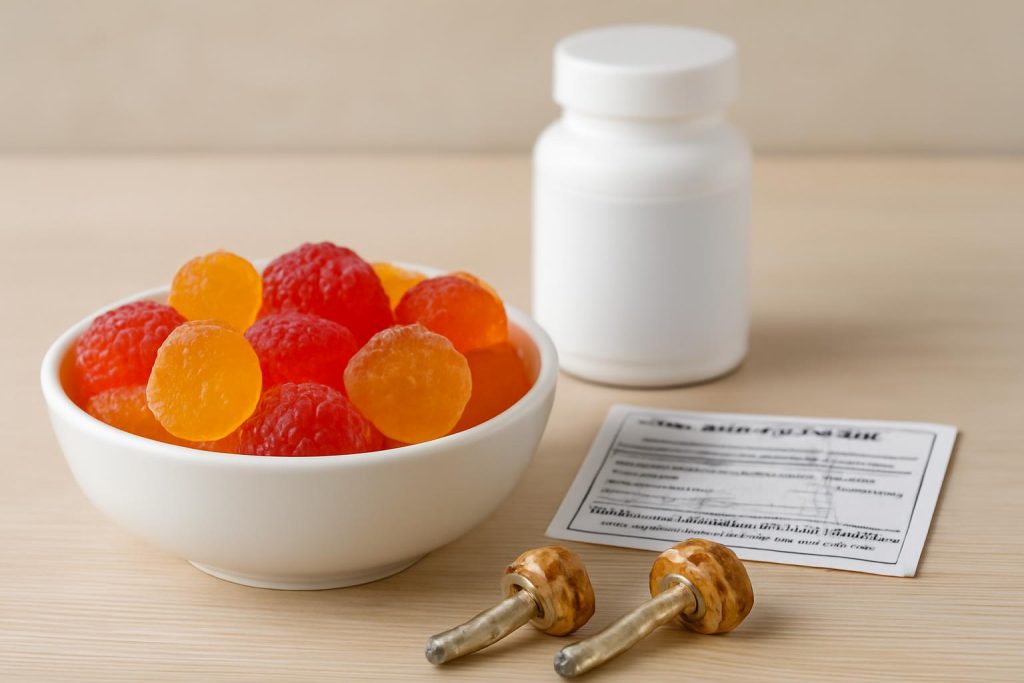
Magic mushroom gummies in Canada require careful attention. Bright packaging, fruit flavours, and familiar candy-like shapes can make mushroom edibles appear simple. In reality, the contents may vary considerably from one product to another. A package described as a “mushroom gummy” may contain functional mushroom extracts, Amanita compounds, cannabis ingredients, synthetic substances, or—when accurately labelled—psilocybin. Those are not interchangeable products.
This is an evergreen educational guide, not a claim about a current recall, enforcement action, or market trend. Its purpose is to help Canadian readers understand labels, recognize uncertainty, and make safer decisions. It does not replace medical advice or legal advice, and it does not encourage the possession or use of controlled substances.
Why mushroom gummies can be difficult to evaluate
Dried mushrooms are at least recognizable as a botanical product, although appearance alone cannot reliably confirm species or potency. Gummies are more complicated because processing removes the original form. A finished edible can contain several active ingredients, and its colour or flavour tells you almost nothing about what is inside.
Online descriptions also use overlapping language. “Magic mushroom,” “psychedelic gummy,” “mushroom blend,” “nootropic,” and “microdose” may refer to very different formulations. Some product pages use mushroom terminology mainly for branding, while others describe an extract without clearly identifying its species, active compounds, or concentration.
For Canadian consumers, the key lesson is simple: the word mushroom on a package does not prove that the product contains psilocybin, and it does not prove that the product is legal, tested, or safe.
What can be inside a mushroom gummy?
Functional mushroom ingredients
Some gummies contain non-intoxicating mushroom ingredients such as lion’s mane, reishi, chaga, or cordyceps. These products are marketed for general wellness, focus, energy, or immune support. They are not the same as psilocybin mushrooms and should not produce a classic psychedelic experience.
Even with functional mushrooms, the label should identify the species, extract type, amount per serving, and other ingredients. Health claims can be exaggerated, particularly when a product uses vague language such as “detox,” “brain boost,” or “natural euphoria.”
Psilocybin or psilocin
Psilocybin is the best-known psychedelic compound associated with many species of psychedelic mushrooms. The body converts psilocybin into psilocin, which contributes substantially to the perceptual and psychological effects. A gummy containing either compound is not equivalent to a typical wellness supplement.
In Canada, psilocybin and psilocin are controlled substances under federal law. Possession, production, distribution, and sale are generally prohibited unless a specific legal authorization applies. A colourful edible format does not create a legal exception.
Amanita compounds and other psychoactive ingredients
Some products promoted as “legal mushroom gummies” may contain Amanita muscaria or compounds such as muscimol and ibotenic acid rather than psilocybin. These substances have different pharmacology and may produce different effects and risks. They should not be treated as a legal substitute for psilocybin or assumed to be harmless because they are not labelled “magic mushrooms.”
Other products may contain undisclosed cannabinoids, stimulants, research chemicals, or mixtures that are difficult to identify from the packaging. If a label says “proprietary blend” without listing quantities, the consumer cannot accurately assess the product’s strength or interactions.
How to read a mushroom gummy label
A responsible label should provide more than a product name and a flavour. Before considering any edible, look for the following information:
- Complete ingredient list: Every active and inactive ingredient should be identified, including sweeteners, colourants, allergens, cannabis compounds, and botanical extracts.
- Amount per piece and package: “One serving” is not always one gummy. Check whether the stated amount applies to a single piece or the entire package.
- Specific active compound: A label that says only “mushroom blend” does not tell you whether the product contains psilocybin, Amanita compounds, or non-intoxicating mushroom extracts.
- Batch or lot information: A batch number supports traceability and is useful if a product is later subject to a safety notice.
- Manufacturer or responsible seller: You should be able to identify who made or distributed the product and how to contact them.
- Testing details: Independent laboratory testing is more meaningful when the report identifies the batch, methods, detected compounds, and contaminants—not merely a generic “lab-tested” badge.
- Storage instructions and expiry information: Heat, moisture, and light can affect edible products and their packaging.
Be cautious with labels that make absolute promises such as “risk-free,” “no side effects,” “guaranteed trip,” or “legal everywhere in Canada.” No responsible product description can guarantee a particular psychological experience or outcome.
Why potency claims may be unreliable
Potency is not always consistent in mushroom edibles. The active material may not be evenly distributed through the gummy mixture, and extracts can vary depending on the source, preparation method, and storage conditions. A product may also lose potency over time or change in texture and quality when exposed to heat.
Marketing terms such as “extra strong,” “premium,” or “heroic” are not standardized measurements. Nor is “microdose” a universal quantity. A serving described as a microdose by one seller may be substantially different from another product using the same term.
When the active ingredient and quantity are not independently verified, the actual strength is uncertain. This uncertainty is especially important with edibles because effects can be delayed. Taking more because nothing seems to be happening can lead to an unexpectedly intense experience later.
Gummies versus dried mushrooms
Gummies and dried mushrooms differ in several practical ways:
- Appearance: Dried mushrooms may provide clues about species or contamination, but gummies conceal the original material.
- Ingredients: Gummies commonly include sugars, acids, flavourings, colours, binders, and other active compounds.
- Onset: Edibles may take time to digest, so effects can feel delayed and may last longer than expected.
- Portioning: A scored or individually packaged product may be easier to divide, but visual portioning does not guarantee equal distribution of active compounds.
- Storage: Moisture and heat can affect gummies, while dried products have different concerns involving humidity, mould, and contamination.
- Traceability: Product quality depends heavily on whether the manufacturer provides credible batch information and testing.
These differences do not make one format automatically safe. They simply show why an edible should not be judged by its appearance or compared casually with dried mushrooms.
Important safety considerations for beginners
Psychoactive mushroom products can affect perception, mood, memory, coordination, and judgment. Some people report changes in time perception, visual experience, emotional intensity, or thought patterns. Others may experience anxiety, panic, confusion, nausea, dizziness, or paranoia.
Risk may be higher for people with a personal or family history of psychosis, bipolar disorder, or severe mental-health conditions. People who are pregnant or breastfeeding, have significant cardiovascular conditions, or take psychiatric or other prescription medicines should speak with a qualified healthcare professional before considering any psychoactive product. Combining mushroom edibles with alcohol, cannabis, stimulants, or other drugs can make effects more unpredictable.
Never drive, cycle in traffic, operate machinery, swim alone, or make important decisions while impaired. Keep all psychoactive edibles away from children and pets. Gummies can look like ordinary candy, making accidental ingestion a serious concern.
When to seek urgent help
Call emergency services or contact a poison information service if someone has severe agitation, chest pain, trouble breathing, seizures, extreme confusion, loss of consciousness, dangerously high temperature, or behaviour that creates an immediate risk of harm. Stay calm, provide honest information about what may have been consumed, and do not leave the person alone.
Understanding the Canadian legal context
Canada’s legal framework for psilocybin is different from the framework for regulated cannabis. Cannabis products are sold through a federally regulated system, while psilocybin remains controlled under the federal Controlled Drugs and Substances Act. The existence of online listings, local delivery claims, or products described as “for research” does not automatically make possession or sale lawful.
Some narrow pathways can exist for authorized research, clinical activity, or individual exemptions. Those pathways are not general permission for consumers to purchase or possess psilocybin gummies. Provincial and municipal policies may also affect enforcement priorities, but local tolerance or a news report should not be confused with federal legalization.
If a product contains cannabis, the rules are different again. Canadian consumers should verify the applicable federal and provincial requirements rather than assuming that a product is covered by the cannabis system simply because it is sold as an edible.
How to assess an online product page
A professional product page should clearly separate education from marketing. Look for a precise product description, complete ingredients, serving information, packaging details, customer support, and policies for damaged or incorrectly described goods. Be wary of pages that rely entirely on testimonials, use dramatic medical claims, or refuse to identify the active ingredients.
It is also useful to distinguish a store’s catalogue from an official regulatory approval. A listing on a website is not evidence that Health Canada has evaluated, authorized, or tested the product. Health Canada authorization and controlled-substance rules remain separate from a retailer’s own descriptions.
Readers who want to explore a retailer’s broader information and catalogue can start with the Zombie Shrooms Store home page. Product descriptions should still be reviewed critically, and Canadian consumers remain responsible for understanding the laws that apply where they live.
Common myths about mushroom gummies
Myth: “Natural” means safe
Natural substances can still cause poisoning, dangerous interactions, allergic reactions, or severe psychological effects. Natural origin is not a safety certification.
Myth: A gummy is weaker than a mushroom
Format does not determine strength. A concentrated extract or undisclosed active ingredient may make a gummy more unpredictable than expected.
Myth: A “legal” label guarantees compliance
Marketing language is not a legal opinion. A seller’s claim that a product is legal everywhere does not override federal or provincial law.
Myth: Microdose claims are standardized
There is no universal commercial definition that makes every product labelled “microdose” equivalent. The term may be used loosely and may not reflect verified potency.
Questions to ask before trusting a product
Before purchasing or consuming any mushroom edible, ask:
- What exact compound or mushroom species is present?
- How much is in each piece and in the full package?
- Is there a batch-specific laboratory report?
- Does the report test for contaminants and undisclosed substances?
- Who manufactured the product, and can they be contacted?
- Is the product legal to possess and sell in my province or territory?
- Could it interact with my medications, health conditions, alcohol, cannabis, or other drugs?
- Can it be stored securely away from children, pets, and anyone who did not consent to consuming it?
If these questions cannot be answered clearly, uncertainty itself is a reason to avoid the product.
Frequently asked questions
Are magic mushroom gummies legal in Canada?
Gummies containing psilocybin or psilocin are generally subject to Canada’s controlled-substance laws. A gummy format, online sale, or “not for human consumption” wording does not automatically make a psilocybin product legal. Specific exemptions and authorized research pathways are narrow and do not amount to general consumer access.
Do all mushroom gummies contain psilocybin?
No. Some contain functional mushroom extracts, while others may contain Amanita compounds, cannabis ingredients, or undisclosed substances. Read the complete ingredient list and do not infer contents from the product name alone.
How can I tell whether a gummy has been tested?
Look for a batch-specific certificate or laboratory report that identifies the sample, date, tested compounds, potency, and contaminants. A generic logo or statement saying “lab tested” is not enough to verify the product.
Can mushroom gummies be mixed with cannabis?
Combining psychoactive substances can produce stronger or less predictable effects, including anxiety, confusion, dizziness, and impaired judgment. Avoid mixing substances, and seek professional medical advice if you are concerned about interactions.
Where can I learn more about a store’s product categories?
You can review the site’s broader product catalogue and product categories. These pages are useful for navigation, but a catalogue is not a substitute for independent legal, medical, or regulatory verification.
The practical takeaway
Magic mushroom gummies in Canada should be approached as potentially psychoactive products—not ordinary candy and not automatically equivalent to dried mushrooms. Focus on the exact ingredients, verified potency, batch traceability, possible interactions, secure storage, and the law that applies in your location.
When a label is vague, a claim sounds too good to be true, or a seller cannot explain what is actually inside the package, the safest conclusion is that there is not enough information to make a responsible decision.