Psychedelics Education
Substance Use Disorders
Oct
Substance Use Disorders: Understanding Addiction, Treatment and Recovery
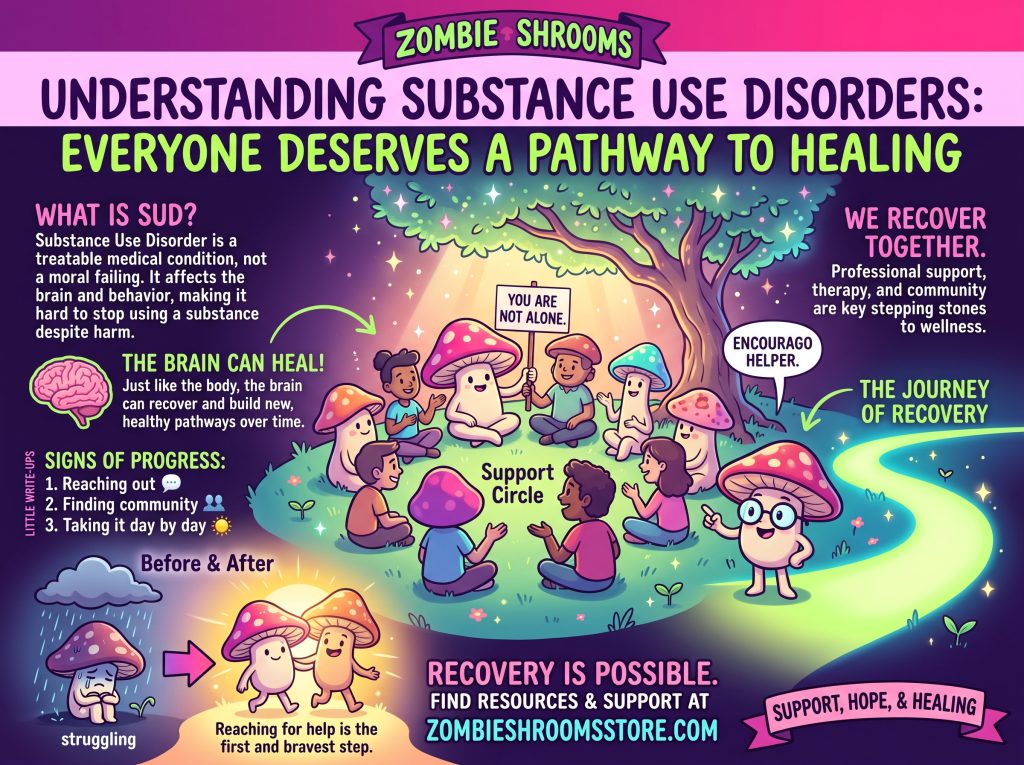
Substance use disorders are health conditions involving patterns of substance use that cause significant impairment or distress. They can affect physical health, relationships, employment, education, and daily responsibilities. Their severity varies, and effective care depends on the substance involved and the person’s circumstances.
Not everyone who uses alcohol or another drug develops a disorder. Equally, someone does not need to reach a crisis before seeking help. Recognising changes early can make it easier to discuss concerns and connect with appropriate support.
This guide explains common terminology, warning signs, dependence, treatment, and recovery. It also addresses psychedelic research carefully, distinguishing experimental approaches from established care and avoiding claims that an unregulated product can treat addiction.
What Are Substance Use Disorders?
A substance use disorder involves more than the presence of a drug in someone’s life. Clinicians assess a pattern of symptoms, its consequences, and how it affects functioning.
Possible features include difficulty controlling use, strong cravings, repeated unsuccessful attempts to reduce use, and continued use despite problems. Some disorders also involve tolerance or withdrawal.
Clinical assessment considers applicable symptoms within a defined period, commonly 12 months. Severity can be classified as mild, moderate, or severe. These categories describe clinical needs, rather than a person’s character or worth. NCBI Bookshelf
What Is Substance Abuse Disorder?
People searching “what is substance abuse disorder” generally mean substance use disorder, the terminology widely used in current clinical discussion.
“Substance abuse” still appears in older resources and everyday language. However, substance use disorder offers a more precise way to discuss symptoms and severity.
The shortened phrase “substance disorder” is less specific. A diagnosis usually identifies the substance category, such as alcohol use disorder or opioid use disorder.
Substance Use, Dependence and Addiction
These terms overlap, but they do not describe exactly the same thing.
Substance Use
Substance use simply means consuming a substance. It may include drinking alcohol, taking a prescribed medication, or using another psychoactive drug.
The term alone does not establish misuse, intoxication, or a diagnosis.
Physical Dependence
Physical dependence means the body has adapted to repeated exposure. Reducing or stopping the substance may produce withdrawal symptoms.
Dependence can develop during appropriate medical treatment. It should not automatically be equated with compulsive use or addiction.
Addiction
Addiction commonly refers to compulsive substance use despite harmful consequences and is often associated with severe substance use disorder.
The search phrase “drug addiction dependence” can obscure these distinctions. A clinician considers the overall pattern rather than diagnosing addiction from tolerance or withdrawal alone. National Institute on Drug Abuse
Is Drug Addiction a Disease?
Yes. Addiction is recognised as a treatable health condition. The National Institute on Drug Abuse describes it as a chronic, relapsing disorder involving compulsive drug seeking and use despite adverse consequences.
Biological processes, including those involved in reward and self-control, contribute to addiction. Environmental conditions and individual circumstances also influence risk and recovery.
Calling addiction a disease does not mean recovery is impossible or that everyone follows the same course. It means that blame and punishment cannot substitute for appropriate healthcare.
“Chronic drug” is not a precise diagnosis. If the concern is prolonged drug use, the useful questions concern symptoms, harms, and support needs. National Institute on Drug Abuse
Warning Signs Worth Discussing
Warning signs may develop gradually and differ between substances and people.
Examples include:
- Using more or for longer than intended.
- Repeatedly trying to cut down without success.
- Spending substantial time obtaining, using, or recovering from a substance.
- Experiencing strong cravings.
- Neglecting important responsibilities.
- Continuing despite recurring health or relationship problems.
- Giving up valued activities.
- Using in hazardous situations.
These signs can justify assessment, but an online checklist cannot establish a diagnosis. The context, substance, and pattern over time matter. samhsa.gov
Appearance Is Not a Diagnosis
Descriptions such as “people on drugs” often encourage assumptions based on behaviour or appearance.
Confusion, agitation, or unusual tiredness can have many causes. Even when substance use is involved, an observer cannot reliably determine the substance or diagnose a disorder from appearance alone.
Focus on specific concerns and immediate safety rather than attaching a label.
Why “Drug Addict” Can Be Harmful Language
“Drug addict” remains a common search phrase, but it reduces a person to a health condition.
“Person with a substance use disorder” is more accurate and respectful. It leaves room for the person’s relationships, abilities, goals, and recovery.
Stigma can make people reluctant to disclose symptoms or seek support. Health Canada identifies discrimination and stigma as barriers to obtaining help. Canada.ca
Respectful language does not minimise harmful behaviour. Families can discuss boundaries, safety, and consequences while avoiding humiliation or assumptions about someone’s worth.
Which Substances Can Be Involved?
Substance use disorders can involve alcohol, opioids, stimulants, cannabis, sedatives, and other substances.
The older phrase “drugs of abuse” groups substances broadly, but their risks and treatment needs differ. Alcohol withdrawal, opioid overdose, and stimulant-related problems require different clinical responses.
A legal or prescribed substance can still be associated with harm. An illegal substance does not produce the same symptoms in every person.
Assessment should therefore identify what is being used, the pattern of use, and relevant health concerns. PMC
Drug Abuse Treatment: What Effective Care Includes
People searching for “drug abuse treatment” usually want practical help. Substance use disorder treatment is the more current clinical description.
Effective care may combine medication, behavioural treatment, monitoring, and practical support. The plan should address the person’s needs rather than assume one programme works for everyone.
The National Institute on Drug Abuse’s treatment overview explains that care can help people stop or reduce use, prevent a return to use, and improve functioning. NIH
Assessment and Care Planning
An assessment helps establish the substances involved, withdrawal risk, health conditions, and appropriate level of support.
Practical barriers also matter. A plan that someone cannot attend or afford may need adjustment.
Behavioural Treatment
Behavioural approaches can help people identify triggers, develop coping strategies, strengthen motivation, and change patterns associated with use.
Family involvement or peer support may be helpful when appropriate, alongside professional care.
Medication
Medication is an established option for certain disorders. For opioid use disorder, approved treatments include methadone, buprenorphine, and naltrexone.
Their appropriate use depends on clinical assessment. Taking prescribed treatment medication should not be dismissed as simply replacing one addiction with another. nida.nih.gov
Withdrawal Management Is Not the Whole Treatment
Withdrawal management addresses symptoms and immediate risks when substance use is reduced or stopped. It does not necessarily address the factors sustaining a disorder.
Continuing care may include medication, behavioural support, follow-up, and help with everyday stability.
Abruptly stopping alcohol after prolonged heavy drinking can cause dangerous withdrawal, including seizures. Someone concerned about this risk should seek medical assessment rather than attempt an unsupervised withdrawal plan. niaaa.nih.gov
When Help Is Urgent
Call emergency services for suspected overdose, breathing difficulty, seizures, loss of consciousness, or severe confusion.
A person who appears unconscious should not simply be left to “sleep it off.” Serious intoxication and withdrawal can require urgent medical care. niaaa.nih.gov
Mental Health and Substance Use
Substance use disorders can occur alongside depression, anxiety, and other mental health conditions.
The relationship can be complex. Symptoms may precede substance use, develop during it, or change during withdrawal. A careful assessment avoids assuming one simple explanation.
Coordinated care can address both substance-related problems and other health needs. Someone should not have to hide one concern to receive help for another. nida.nih.gov
Recovery and a Return to Use
Recovery can involve changes in health, substance use, relationships, and daily functioning. It does not look identical for everyone.
A return to use can occur and may indicate that the care plan needs reassessment. It does not mean all progress has disappeared or that treatment is pointless.
However, relapse can be medically dangerous. Responding promptly with appropriate support is more useful than shame.
Treatment goals and follow-up should remain responsive to changing needs, rather than treating recovery as a single completed event. nida.nih.gov
Psychedelic Research and Substance Use Disorders
Researchers are investigating psychedelic-assisted approaches for some substance use disorders. This remains a research question, rather than proof that mushroom products treat addiction.
Findings depend on the protocol and population. A 2025 phase 2 trial examining psilocybin after alcohol withdrawal treatment did not establish that its single-session approach significantly reduced alcohol use or prolonged abstinence.
The PubMed record for this alcohol use disorder trial offers context for interpreting claims. Clinical research includes defined preparations and oversight; unregulated gummies or mushrooms are not equivalent interventions. PMC
Supporting Someone and Finding Help
Choose a calm moment to discuss specific concerns. Describe what you have noticed and ask whether the person would consider an assessment.
Support can include helping arrange an appointment or identifying services. You can also establish boundaries around unsafe behaviour without using threats or humiliation.
In the United States, a healthcare professional or recognised treatment service can help identify care options. In Canada, Health Canada’s substance use resources provide information about treatment and community support.
A useful first appointment can begin with uncertainty: “I am worried about my substance use and want to understand what help is available.” Canada.ca
Frequently Asked Questions
1. Does all substance use indicate a disorder?
No. Diagnosis depends on symptoms, impairment, and the pattern of use. Substance use alone does not establish a disorder.
2. Is dependence the same as addiction?
No. Physical dependence can occur during appropriate treatment. Addiction involves a broader pattern, including compulsive use despite harm.
3. Can substance use disorders be treated?
Yes. Effective options exist, although the appropriate approach differs by substance, severity, and individual needs.
4. Does relapse mean treatment failed?
Not necessarily. It can indicate a need to reassess care. A return to use should receive timely attention because it may carry serious risks.
5. Are psychedelic products established addiction treatments?
Research is ongoing. Findings from supervised trials do not establish that unregulated psychedelic products safely or effectively treat addiction.
Where to Explore Further
For background on mushroom terminology and the limits of therapeutic claims, read Golden Teacher Mushrooms: Origins, Traits and Cultural History.
For a separate discussion of food, supplements, and health evidence, explore Are Mushrooms Healthy? Nutrition, Benefits and Limits.