Psychedelics Education
Are Mushrooms Good for You
Oct
Are Mushrooms Good for You? Nutrition, Benefits, and What Research Shows
Are mushrooms good for you? For most people, edible culinary mushrooms can be a nutritious addition to a varied diet. They offer savory flavor, useful vitamins and minerals, and some fiber without adding many calories when prepared simply.
Their value comes from how they fit into everyday meals. Adding them to an omelet, vegetable soup, or bean dish can introduce different textures and flavors while expanding the foods you eat.
However, nutrition facts should be separated from exaggerated health claims. Eating mushrooms does not guarantee disease prevention, and research on a particular extract does not establish the same benefits for every mushroom product.
This article covers familiar food varieties, including white button, cremini, portobello, shiitake, and oyster mushrooms. Psychedelic mushrooms and concentrated supplements belong to different discussions.
Why Are Mushrooms Good for You?
One practical advantage is versatility. Mushrooms work in breakfast dishes, soups, salads, pasta, and roasted vegetable mixtures. Their savory flavor can make a simple meal more appealing.
They also provide an opportunity to vary your diet without completely changing your cooking routine. Stir a handful into scrambled eggs, add chopped pieces to lentils, or roast them alongside carrots and onions.
Although commonly treated as vegetables in cooking, mushrooms are fungi. Their biological classification does not stop them from contributing to balanced meals.
Think of them as one useful ingredient among many. Their strongest everyday benefit may be helping you enjoy meals that also contain vegetables, whole grains, and suitable protein sources.
What’s Inside a Typical Serving?
Do mushrooms have nutritional value? Yes, although their nutrient content varies by species, growing conditions, portion size, and preparation.
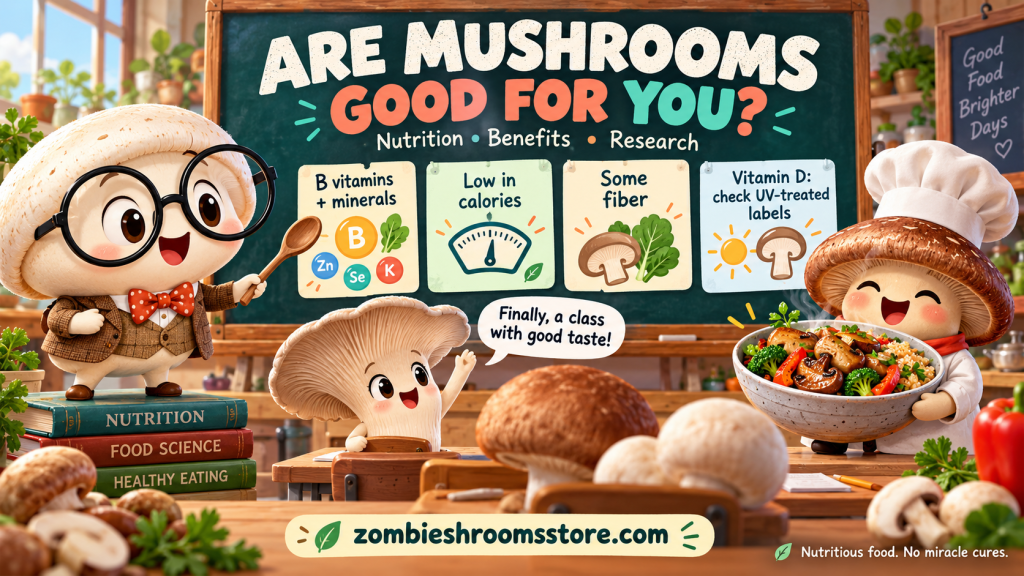
The nutrients in mushrooms include several B vitamins and minerals such as copper, selenium, and potassium. They contain some protein, but typical servings should not be treated as a major protein source.
Vitamin D is particularly variable. Mushrooms exposed to ultraviolet light can contain meaningful amounts of vitamin D2. Those grown without substantial UV exposure may contain little.
Harvard’s overview of mushroom nutrition explains these differences and identifies their generally modest fiber content. Check product labels when vitamin D is a reason for choosing a particular package. nutritionsource.hsph.harvard.edu
A Closer Look at Button Varieties
White button mushrooms are affordable, widely available, and easy to incorporate into familiar recipes. Their mild taste makes them useful for people exploring different food textures.
When comparing button mushroom nutrients, start with the serving size. A few slices scattered over dinner contribute less than a substantial serving.
Also distinguish between the mushroom itself and the finished dish. Butter, cheese, cream, cooking oil, and salty sauces can substantially change a recipe’s overall nutritional profile.
| Feature | Practical interpretation |
|---|---|
| B vitamins | Amounts vary across varieties and portions |
| Minerals | Several minerals contribute to the food’s nutritional value |
| Fiber | A modest contribution rather than a concentrated source |
| Protein | Pair with beans, tofu, eggs, or another substantial source |
| Vitamin D | Look for UV-treated labeling and stated amounts |
| Preparation | Assess added ingredients as well as the mushrooms |
Understanding Potassium Content
Are mushrooms high in potassium? They contribute potassium, but the answer depends on the species, serving size, and preparation.
It is useful to distinguish “contains potassium” from “high in potassium.” In U.S. labeling guidance, a food providing at least 20% of the Daily Value per serving is considered high in a nutrient.
Potassium supports normal nerve transmission and muscle contraction. You obtain it from a variety of foods, so there is no need to rely on one ingredient.
The National Institutes of Health potassium fact sheet explains food sources and labeling thresholds. It also notes that standard intake recommendations may not apply to people with impaired potassium excretion. ods.od.nih.gov
If you follow a prescribed potassium restriction, use your clinician’s advice when choosing portions.
How Much Fiber Does a Serving Provide?
People searching “how much fiber in mushrooms” often want a single number. A useful answer requires knowing the variety, portion, and whether the food is raw or cooked.
Mushrooms generally provide modest amounts of fiber. They can contribute to your intake, but a few pieces added to a meal should not be mistaken for a high-fiber eating plan. nutritionsource.hsph.harvard.edu
Build the meal around several ingredients. A stew containing mushrooms, lentils, vegetables, and barley offers more variety than a bowl of mushrooms alone.
Portion comparisons also need care. Cooking changes water content and volume, so a cup of cooked pieces is not directly equivalent to a cup of raw slices.
Use a nutrition entry that matches the food you actually eat.
Does Cooking Change the Benefits?
Are cooked mushrooms good for you? Yes, they can fit into a balanced diet. The cooking method and accompanying ingredients help determine the nutritional value of the finished meal.
Roasting, simmering, grilling, and sautéing all offer useful ways to prepare culinary varieties. Choose a method that suits the recipe and your preferences.
Cooking does not make every dish equally nutritious. A mushroom soup with beans and vegetables differs from an appetizer that is battered, deep-fried, and served with a rich dip.
Similarly, the nutritional content of mushrooms alone cannot describe a creamy pasta sauce. Consider the whole recipe rather than judging it by one ingredient.
Simple Preparation Ideas
Start with a recipe you already enjoy:
- Add sliced pieces to an omelet with spinach.
- Roast them with onions, garlic, and a little oil.
- Stir chopped mushrooms into a lentil stew.
- Combine them with tofu and vegetables.
- Add them to barley soup or a whole-grain rice dish.
If you dislike the texture, try chopping them finely or browning them before combining them with other ingredients.
A preparation you enjoy and repeat is more useful than an elaborate recipe you make once.
What Human Studies Show
Are mushrooms good for you according to research? Their food value is clear, while claims about specific disease outcomes require more careful interpretation.
Researchers have examined associations between mushroom consumption and cardiovascular or metabolic health. A systematic review indexed on PubMed considered evidence from prospective observational studies and clinical trials. pubmed.ncbi.nlm.nih.gov
These study types answer different questions. Observational research can identify patterns, but people who eat more mushrooms may also differ in exercise, smoking, other foods, or healthcare access.
Clinical trials can examine effects more directly. However, their conclusions still depend on the participants, study duration, preparation used, and outcomes measured.
Another systematic review described limited experimental findings suggesting improvements in certain cardiometabolic markers while calling for stronger research. Those results support further investigation rather than a promise of disease prevention. pubmed.ncbi.nlm.nih.gov
Understanding the Evidence
Before accepting a health headline, ask what the researchers actually studied.
Was the research conducted in people? Did participants eat whole food or take an extract? Was there a comparison group? Did the study measure symptoms, a laboratory marker, or long-term health outcomes?
Results from cells or animals cannot automatically be applied to ordinary meals. Likewise, a study of one preparation does not prove benefits for every capsule, powder, or chocolate labeled “mushroom.”
Good educational content explains these limits alongside the findings.
Food, Supplements, and Psychedelic Products
These categories should be evaluated separately.
Culinary mushrooms are ingredients used in everyday meals. Supplements may contain dried material, extracts, or combinations of ingredients. Psychedelic products contain psychoactive substances and raise separate medical and legal questions.
A shared word on the label does not make their effects or evidence interchangeable. Findings about edible button mushrooms should not support claims about unrelated products.
For readers visiting zombieshroomsstore.com, identifying the actual species and ingredients is an essential first step when assessing an article or product description.
Marketing language such as “natural,” “functional,” or “premium” does not establish effectiveness.
Building a Balanced Plate
Mushrooms can contribute flavor and variety, but they cannot provide everything a meal needs.
Combine them with an appropriate protein source, vegetables, and a carbohydrate food that suits your preferences. Examples include a bean-and-mushroom skillet, a tofu stir-fry, or an omelet served with whole-grain toast.
Replacing some meat in a recipe changes its texture and nutritional profile. If you remove meat entirely, include another substantial protein source instead of assuming mushrooms supply an equivalent amount.
There is no established requirement to eat them daily. Choose a comfortable portion and vary your meals.
You can also eat well without mushrooms if you dislike them. Overall eating habits matter more than whether one particular food appears on your plate.
Frequently Asked Questions
1. Are mushrooms good for you every day?
Edible culinary varieties can be included regularly if you enjoy and tolerate them. There is no requirement to eat them daily, and no universal serving guarantees additional health benefits. Keep your meals varied.
2. Do inexpensive varieties offer nutritional value?
Yes. Price does not reliably indicate nutritional quality. Familiar white button varieties can contribute nutrients and fit many recipes. You do not need a specialty product or supplement to include mushrooms in your diet.
3. How do they compare with other potassium sources?
Compare specific servings rather than broad food names. Variety and preparation affect the amount. If potassium intake matters for a medical reason, use your prescribed dietary guidance rather than a general online comparison.
4. Is cooking with butter a healthy option?
It can fit into a varied diet. The amount of butter and the rest of the meal matter. Roasting, simmering, and cooking with a measured amount of oil offer alternatives when you want different preparations.
5. Can they replace meat completely?
They can provide savory flavor and an appealing texture, but their nutritional profile differs from meat. Include beans, lentils, tofu, eggs, or another suitable protein source when adapting a recipe.
Further Reading
Use the mushroom nutrition search on zombieshroomsstore.com to look for related material. Compare health claims with the authoritative sources linked above, paying attention to whether the evidence concerns whole food, extracts, or another product category.