Psychedelics Education
Lions Mane Mushroom
Oct
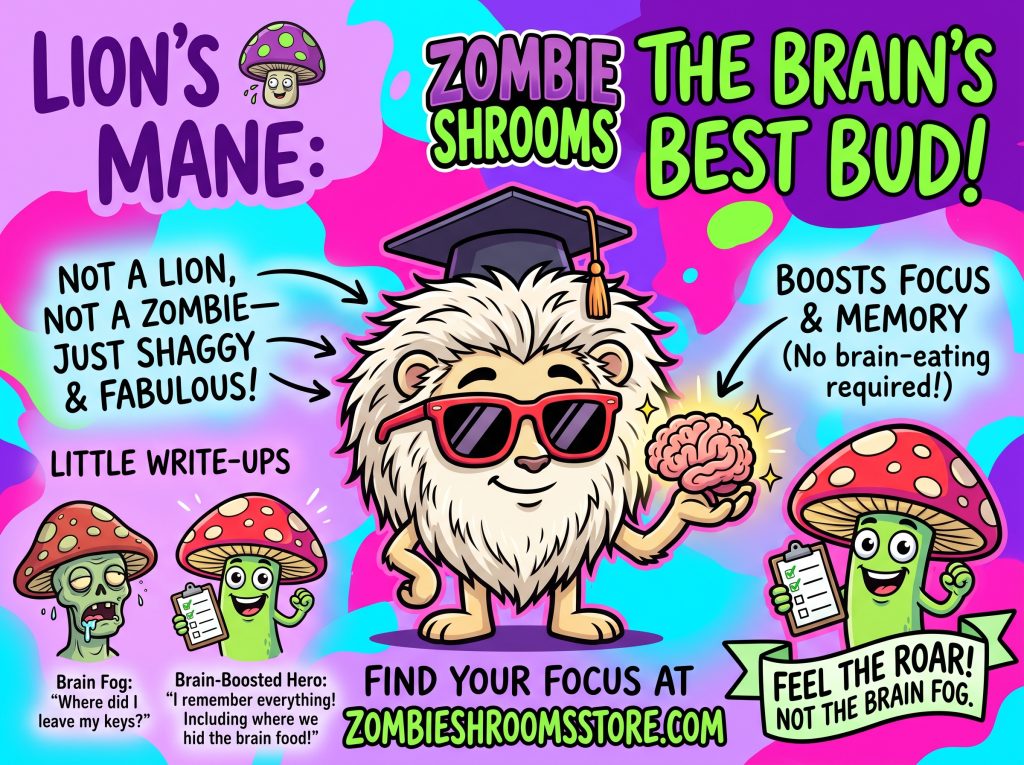
Lions Mane Mushroom: Benefits, Supplement Forms and What Research Shows
Lions mane mushroom is an edible fungus known scientifically as Hericium erinaceus. Its distinctive appearance and growing presence in supplement products have attracted interest across the United States and Canada. People often search for it hoping to understand its possible effects on memory, concentration, mood, and general health.
The most useful answer separates scientific interest from established benefits. Researchers have investigated lion’s mane, including in small human trials, but the evidence does not justify promises of sharper thinking, restored memory, or treatment for neurological conditions.
Lion’s mane is also different from psychedelic mushrooms. It is not a psilocybin-containing mushroom and should not be described as a psychedelic medicine. Understanding those distinctions helps readers evaluate powders, capsules, drops, and the claims surrounding them.
What Is Lions Mane Mushroom?
Hericium erinaceus is a mushroom with hanging, tooth-like spines rather than the familiar cap-and-gill appearance of many culinary species. Its pale, shaggy fruiting body explains the common name “lion’s mane.”
It has a history of culinary use and appears in traditional health practices. Today, it is also sold in concentrated preparations marketed as functional mushroom supplements.
A fresh mushroom, dried whole-mushroom powder, and concentrated extract are different preparations. Although they may originate from the same species, their composition and intended use can differ substantially. PubMed
Is Lion’s Mane Psychedelic?
No. Lion’s mane is not classified as a classic psychedelic mushroom and does not naturally provide the psilocybin-related effects associated with Psilocybe species.
The shared word “mushroom” can create confusion, particularly when supplement products and psychedelic discussions appear together online.
A product containing lion’s mane alongside other ingredients needs its own assessment. The presence of this species does not establish the identity or safety of everything else in the mixture.
What Does Lions Mane Do?
The question “what does lions mane do?” needs a distinction between proposed biological activity and demonstrated effects in people.
Researchers study its constituents because laboratory and animal findings suggest potential activity relevant to nervous-system function. Compounds discussed in this research include hericenones and erinacines.
However, a substance affecting a biological pathway in a laboratory does not establish that a commercially available supplement improves everyday memory or repairs human nerves. Absorption, preparation, concentration, and the population studied all matter. PubMed
Why Laboratory Findings Need Human Confirmation
A cell experiment can help identify a question worth investigating. It cannot tell us whether someone will notice a meaningful improvement after taking a capsule.
Animal research also has limitations when applied to people. Human trials need to measure relevant outcomes, compare the intervention with an appropriate control, and monitor unwanted effects.
That is why phrases such as “supports brain health” deserve closer examination. Ask which outcome was measured and whether the actual product was studied.
Does Lions Mane Work? Understanding Human Research
There is some human research, but findings remain limited and mixed. A useful answer to “does lions mane work?” therefore depends on the proposed benefit, preparation, and evidence.
A Small Trial in Healthy Young Adults
A 2023 pilot trial involved 41 adults aged 18–45. Researchers assessed cognitive performance and mood-related measures after a single administration and over a 28-day intervention.
The study reported faster performance on the Stroop task following a single administration. That is an interesting result, but improvement on one test does not establish a broad increase in intelligence, memory, or daily productivity. PubMed
A Later Trial Found No Overall Cognitive Improvement
A 2025 randomised, placebo-controlled crossover study involved 18 healthy young adults. It assessed a standardised fruiting-body extract and measured cognition and mood.
The researchers found no significant improvement in overall composite measures of cognitive performance or mood. Performance improved on an individual pegboard test, suggesting any possible effect might be specific to a task or domain.
Readers can examine the PubMed record for this lion’s mane cognition study. Its findings illustrate why a positive individual result should be considered alongside the overall outcome. PubMed
What These Studies Cannot Establish
Small trials cannot reliably resolve every question about effectiveness or uncommon adverse effects. They also do not establish that every retail product behaves like the preparation tested.
Results in healthy young adults cannot automatically be applied to older adults, children, or people with a diagnosed condition. Broader conclusions require appropriately designed research in those populations.
Mushroom Supplements for Brain Health: Reading Claims Carefully
Searches for “mushroom supplements for brain” often reflect concerns about concentration, forgetfulness, or mental fatigue.
Those experiences have many possible explanations. Sleep, stress, medications, and underlying health conditions can affect how someone feels and functions.
A supplement should not become a substitute for investigating persistent or worsening symptoms. Nor should a preliminary research result be presented as proof that lion’s mane treats ADHD, dementia, depression, or another condition.
Support Claims Versus Treatment Claims
General wellness wording and a claim to treat a disease are different statements.
Even a modest-sounding phrase can imply more certainty than the evidence supports. “Supports focus” should prompt the same questions as a stronger claim: who was studied, what changed, and how reliably?
A clear educational description acknowledges potential research interest while explaining where confidence remains limited.
Lions Mane Supplement Forms Explained
A lions mane supplement may come as capsules, tablets, powders, or liquids. Convenience varies, but the format alone does not establish effectiveness.
Lions Mane Mushroom Powder
Lions mane mushroom powder can mean dried mushroom material ground into a powder. It can also describe a powdered extract.
Those are not necessarily equivalent. Look for a clear ingredient description rather than assuming every powder has the same concentration.
The serving quantity, source material, extraction information, and additional ingredients all help explain what the product contains.
Lions Mane Powder in Blends
Some powders contain multiple mushrooms, herbs, sweeteners, or flavourings.
A blend may make it difficult to determine how much lion’s mane is present, particularly when only a total mixture weight is provided.
Evidence about one ingredient cannot establish the effect of an entire mixture. Equally, an effect attributed to a blend cannot necessarily be assigned to lion’s mane alone.
Lions Mane Drops
Lions mane drops are liquid preparations that may contain extracts alongside water, alcohol, glycerin, or other ingredients.
A dropper is a delivery format, not evidence of superior absorption or faster benefits. Comparing liquid products requires attention to their stated concentration and serving volume.
A quantity expressed in millilitres cannot be compared directly with a powder quantity without knowing what each preparation contains.
Capsules and Tablets
Capsules can provide a convenient measured serving, but the material inside still matters.
Two similarly sized capsules may contain different mushroom preparations or mixtures. Clear labelling offers more useful information than capsule count alone.
Fruiting Body, Mycelium and Extract Labels
The fruiting body is the visible mushroom structure. Mycelium is the fungal network involved in growth.
Research may use fruiting-body material, mycelial preparations, or extracts selected for particular characteristics. These distinctions help explain why findings should remain attached to the preparation studied.
Neither “fruiting body” nor “mycelium” automatically proves a finished product’s clinical effectiveness.
Likewise, an extraction ratio such as 10:1 does not demonstrate that a product provides ten times the benefit. It describes a manufacturing relationship that needs supporting information.
Product identity, composition, testing, and relevant human evidence are separate questions.
Understanding “Real Mushrooms Lions Mane” Searches
“Real Mushrooms lions mane” is a search for a particular brand’s products, rather than a separate mushroom species.
When assessing any branded supplement, identify the exact formulation. Product ranges, serving sizes, and labels can change.
A brand’s marketing description is not the same as independent evidence that its product improves cognition. Reviews may help someone understand taste, packaging, or usability, but they cannot establish a medical benefit.
The same standard applies across brands: clear ingredients, meaningful testing information, and claims that accurately reflect the available research.
Safety Considerations and Evidence Gaps
Lion’s mane’s culinary use does not establish that every concentrated supplement is suitable for everyone.
Human studies have reported gastrointestinal complaints, including abdominal discomfort, nausea, and diarrhoea. The limited size and duration of much research also leave uncertainty about uncommon reactions and some longer-term uses. NCBI Bookshelf
People taking medication or managing a medical condition should discuss the specific preparation with a healthcare professional. Pregnancy, breastfeeding, and use in children require particular care because evidence cannot simply be assumed from adult studies.
Avoid presenting an unverified interaction list as established fact. Limited information about interactions is an evidence gap, rather than proof that none can occur.
Regulation in the United States and Canada
Lion’s mane food and supplement products should not be described as prescription psychedelic medications. Their regulatory category depends on the product and jurisdiction.
United States
The FDA’s consumer guidance on dietary supplements explains that supplements are not approved for safety and effectiveness before marketing in the same way as medicines.
This does not mean supplements are entirely unregulated. Manufacturers have responsibilities, and authorities can act against unsafe or unlawful products.
A product’s availability therefore should not be interpreted as FDA confirmation that it improves memory or treats disease. FDA
Canada
Health Canada’s natural health product guidance explains how licensed products can be identified by an eight-digit Natural Product Number.
The authorisation concerns the particular product and its labelled conditions of use. It should not be extended to unrelated claims or other preparations.
Check the exact product’s licensing information, recommended use, and warnings. A Canadian natural health product licence and US supplement marketing operate under different systems. Canada.ca
Frequently Asked Questions
1. Does lions mane mushroom make you high?
No. Lion’s mane is not a psilocybin-containing psychedelic mushroom. Products with additional ingredients require a separate assessment.
2. Does lion’s mane improve memory?
Small human studies provide research interest, but they do not establish a reliable memory benefit for everyone. Findings depend on the preparation, population, and outcome measured.
3. Are drops better than powder?
There is no established general rule that drops work better. Compare composition and relevant evidence rather than assuming a liquid format is superior.
4. How quickly does a lions mane supplement work?
There is no reliable universal timeline. Testing outcomes after a particular interval does not establish when someone will notice a meaningful everyday benefit.
5. Can lion’s mane replace prescribed treatment?
It should not replace prescribed treatment on the basis of preliminary research or promotional claims. Discuss treatment changes and persistent symptoms with a qualified healthcare professional.
Where to Explore Further
For related nutritional context, explore Are Mushrooms Healthy? Nutrition, Benefits and Limits.
For a separate explanation of psilocybin-containing mushrooms and the limitations of variety names, read Golden Teacher Mushrooms: Origins, Traits and Cultural History.