Psychedelics Education
Amanita vs Psilocybin in Canada: Key Differences, Effects, and Safety Considerations
Oct
Searches for mushroom gummies, psychedelic edibles, and magic mushrooms can lead Canadian consumers to products containing very different ingredients. Two names that are frequently confused are Amanita muscaria and psilocybin mushrooms. Although both are fungi, they do not produce the same type of experience and should not be treated as interchangeable.
This guide explains Amanita vs psilocybin in Canada in straightforward terms. It covers the compounds involved, how the effects may differ, why product labels matter, and what Canadian adults should consider before purchasing or consuming any mushroom-derived edible. It is educational information, not medical or legal advice.
What is the difference between Amanita and psilocybin mushrooms?
The biggest difference is the active chemistry. Most classic magic mushrooms contain psilocybin, a naturally occurring compound that the body converts into psilocin. Amanita muscaria, sometimes called fly agaric, contains different compounds, primarily muscimol and ibotenic acid.
These compounds interact with the nervous system in different ways. Psilocin is associated with changes in perception, mood, cognition, and the sense of time. Muscimol acts through pathways involving the brain’s GABA system, which can produce effects that are more sedating, dreamlike, dissociative, or physically unusual.
In practical terms, a product described as an Amanita gummy is not simply a legal or milder version of a psilocybin gummy. It may contain a completely different active ingredient, and the expected experience can vary considerably.
Psilocybin mushrooms explained
Psilocybin is found in a number of mushroom species, including varieties commonly associated with the Psilocybe genus. After ingestion, the body converts psilocybin into psilocin. This conversion is one reason people often use the terms together, even though they refer to different compounds.
Reported effects can include intensified colours and sounds, altered time perception, vivid thoughts, emotional sensitivity, visual patterning, and a changed sense of self. Some people describe the experience as reflective or connected, while others may experience anxiety, confusion, nausea, or fear.
Effects are influenced by many factors, including the specific mushroom, potency, amount consumed, individual metabolism, expectations, surroundings, mental state, and whether other substances are involved. A familiar product format, such as a chocolate or gummy, does not make the active compound predictable.
For a broader introduction to psychedelic compounds and responsible education, readers can visit the Zombie Shrooms Store home page.
Amanita muscaria explained
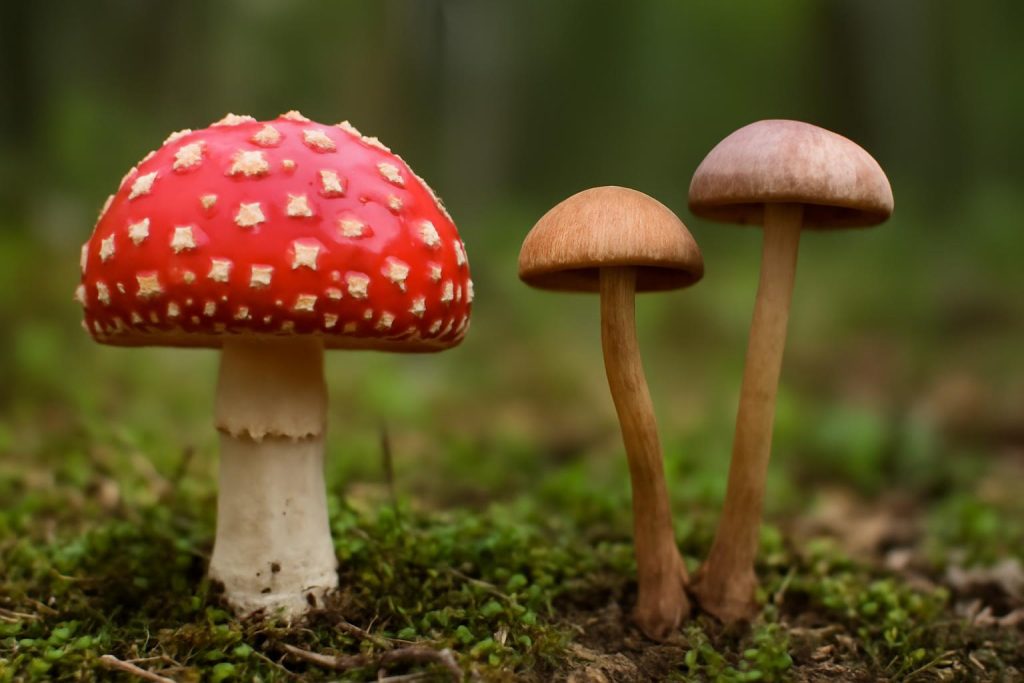
Amanita muscaria is recognisable by its red or orange cap, white spots, and association with folklore and popular culture. It is not the same mushroom as the psilocybin-producing species commonly called magic mushrooms.
The principal compounds associated with Amanita muscaria are muscimol and ibotenic acid. The balance between these compounds can be affected by the mushroom’s origin, preparation, processing, and storage. As a result, products made with Amanita material may not produce identical effects from one batch to another.
People who consume Amanita products may report drowsiness, dreamlike sensations, altered coordination, dizziness, muscle relaxation, confusion, or unusual changes in perception. Some may experience nausea or vomiting. The experience can be less predictable than consumers expect, particularly when the product does not clearly disclose its ingredients or testing information.
Amanita is sometimes marketed with phrases such as “mushroom trip,” “legal shrooms,” or “psychedelic gummies.” Those descriptions can be misleading if they cause buyers to assume the product contains psilocybin. The ingredient panel is more informative than the front-of-package marketing.
Amanita vs psilocybin: a simple comparison
| Feature | Psilocybin mushrooms | Amanita muscaria products |
|---|---|---|
| Main compounds | Psilocybin and psilocin | Muscimol and ibotenic acid |
| Typical description | Classic psychedelic effects | Dreamlike, sedating, dissociative, or physically unusual effects |
| Common product confusion | May be advertised as magic mushrooms or shrooms | May be marketed as mushroom gummies without clearly highlighting Amanita |
| Primary consumer concern | Potency, psychological intensity, and legal status | Variable formulation, unclear compound levels, and unpredictable reactions |
This table is a general educational comparison, not a guarantee of how any individual product will feel. Mushroom chemistry can vary, and commercial formulations may include additional ingredients such as cannabinoids, stimulants, herbs, or other psychoactive compounds.
Why mushroom edible labels matter in Canada
Words such as “mushroom,” “psychedelic,” “natural,” and “plant-based” do not identify a product’s active ingredient. A gummy can contain a mushroom extract, a non-psychoactive functional mushroom, Amanita compounds, psilocybin, or an undisclosed blend. These categories should not be assumed to be equivalent.
Questions to ask when reading a label
- Does the label name the exact mushroom species or active compound?
- Does it state the amount per serving and the number of servings?
- Are all ingredients listed, including cannabinoids, stimulants, and proprietary blends?
- Is there a batch number, manufacturing date, and expiry information?
- Does the seller provide credible third-party testing for identity and contaminants?
- Are health, therapeutic, or “legal high” claims presented without supporting details?
A label that says only “mushroom blend” or “proprietary psychedelic formula” gives the buyer limited information. Unclear labelling is especially important when the product is an edible, because effects may take time to appear and consuming more too quickly can increase the risk of an unpleasant reaction.
Consumers comparing formats can review the site’s product catalogue sitemap for an overview of listed product pages. Product availability and legality may vary by location, so shoppers should verify the details that apply to their province or territory before ordering.
Are Amanita and psilocybin legal in Canada?
Canadian drug rules do not treat every mushroom product in the same way. The legal status of a product depends on its ingredients, concentration, intended use, marketing, and how it is supplied. Psilocybin and psilocin are controlled substances in Canada, and possession, production, distribution, or sale outside authorised channels can carry serious legal consequences.
Amanita muscaria is chemically different from psilocybin mushrooms, but that does not mean every Amanita product is automatically approved, risk-free, or lawful to sell. Consumer products may also raise issues under food, natural health product, consumer protection, labelling, or controlled-substance rules. A product being available online is not proof that it complies with Canadian law.
Rules and enforcement can change, and provincial or municipal requirements may affect retail activity. Anyone seeking a definitive answer about a specific product should consult current Canadian legal and regulatory information or a qualified lawyer. Do not rely solely on a seller’s use of words such as “legal,” “compliant,” or “for research.”
Can Amanita or psilocybin interact with cannabis?
Combining psychoactive substances can make effects more difficult to predict. Cannabis may intensify changes in perception, anxiety, dizziness, sedation, confusion, or impairment when used with mushroom products. Alcohol and sedating medications can add further risks, including poor coordination and reduced ability to respond to an uncomfortable experience.
People taking antidepressants, antipsychotics, stimulants, sleep medications, seizure medications, or other prescription drugs should speak with a healthcare professional before using any psychoactive mushroom product. Individuals with a personal or family history of psychosis, mania, or certain serious mental-health conditions should be particularly cautious and seek professional guidance.
Basic harm-reduction considerations
No mushroom product is risk-free, but a few general precautions can reduce avoidable problems:
- Do not assume Amanita products and psilocybin products have similar effects.
- Read the full ingredient panel rather than relying on the product name or artwork.
- Avoid mixing mushroom edibles with alcohol, cannabis, or other psychoactive substances.
- Do not drive, cycle in traffic, swim, climb, or operate machinery while impaired.
- Keep products away from children and pets, and store them in their original packaging.
- Be cautious with products that have no batch information, testing details, or clear manufacturer identity.
- Do not redose simply because effects have not appeared quickly; edible onset can be delayed.
If someone develops severe confusion, chest pain, difficulty breathing, seizures, loss of consciousness, extreme agitation, or repeated vomiting after consuming a mushroom product, seek urgent medical help. Keep the packaging available so healthcare professionals can identify the ingredients.
Common myths about Amanita and psilocybin
Myth: All psychedelic mushroom gummies contain psilocybin
False. Some products contain Amanita compounds, functional mushroom extracts, cannabinoids, or ingredients that are not clearly disclosed. The word “mushroom” alone does not identify psilocybin.
Myth: Amanita is simply a weaker form of magic mushroom
False. Amanita and psilocybin work through different primary compounds and can produce different physical and psychological effects. “Weaker” is not a reliable way to compare them.
Myth: Natural products cannot be dangerous
False. Natural substances can still cause poisoning, interactions, allergic reactions, impaired judgement, and unpredictable mental or physical effects. Natural does not automatically mean safe or regulated.
Myth: A colourful package proves a product is professionally tested
False. Packaging design is marketing, not laboratory evidence. Testing information, transparent ingredients, batch identification, and responsible manufacturing details are more meaningful indicators.
How to make a more informed choice
Start by identifying what you are actually considering: a psilocybin mushroom, an Amanita product, a functional mushroom supplement, or a blend containing several active ingredients. Then check the label, research the seller, consider possible interactions, and review the laws that apply where you live in Canada.
It can also help to separate education from advertising. Claims that a product guarantees euphoria, cures a condition, produces a predictable spiritual experience, or is risk-free should be treated sceptically. No responsible source can promise the same outcome for every person.
For more educational reading about mushroom products and psychedelic topics, explore the site’s post sitemap. Information should support careful decision-making, not pressure anyone to consume a product.
Frequently asked questions
Is Amanita the same as a magic mushroom?
No. Amanita muscaria is a different mushroom from the psilocybin-producing species commonly called magic mushrooms. Their active compounds and effects are different.
Does Amanita contain psilocybin?
Amanita muscaria is not naturally known for containing psilocybin as its primary active compound. Its effects are associated mainly with muscimol and ibotenic acid.
Are mushroom gummies in Canada always psilocybin gummies?
No. Mushroom gummies can contain many different ingredients, including Amanita extracts, functional mushrooms, cannabinoids, or blends. Always read the complete label and do not infer the ingredients from the product name.
Can Amanita products cause hallucinations?
Some people report altered perception or dreamlike experiences after consuming Amanita products, but effects can vary widely. They may also include drowsiness, nausea, confusion, dizziness, and impaired coordination.
Is Amanita automatically legal in Canada?
Not necessarily. The legal and regulatory status can depend on the exact product, ingredients, claims, method of sale, and jurisdiction. Online availability is not proof of compliance.
The bottom line
The key lesson in the Amanita vs psilocybin comparison is that “mushroom” is a broad label, not a description of one predictable experience. Psilocybin mushrooms and Amanita muscaria involve different compounds, different effects, and different regulatory questions.
Canadian consumers can make better-informed decisions by checking the active ingredients, looking for transparent batch information, avoiding risky combinations, and treating legal claims with caution. When the contents or source of an edible are unclear, the safest choice is to avoid guessing.