Psychedelics Education
Magic Mushroom Facts and Myths: What Canadians Should Really Know Before Trying Shrooms
Oct
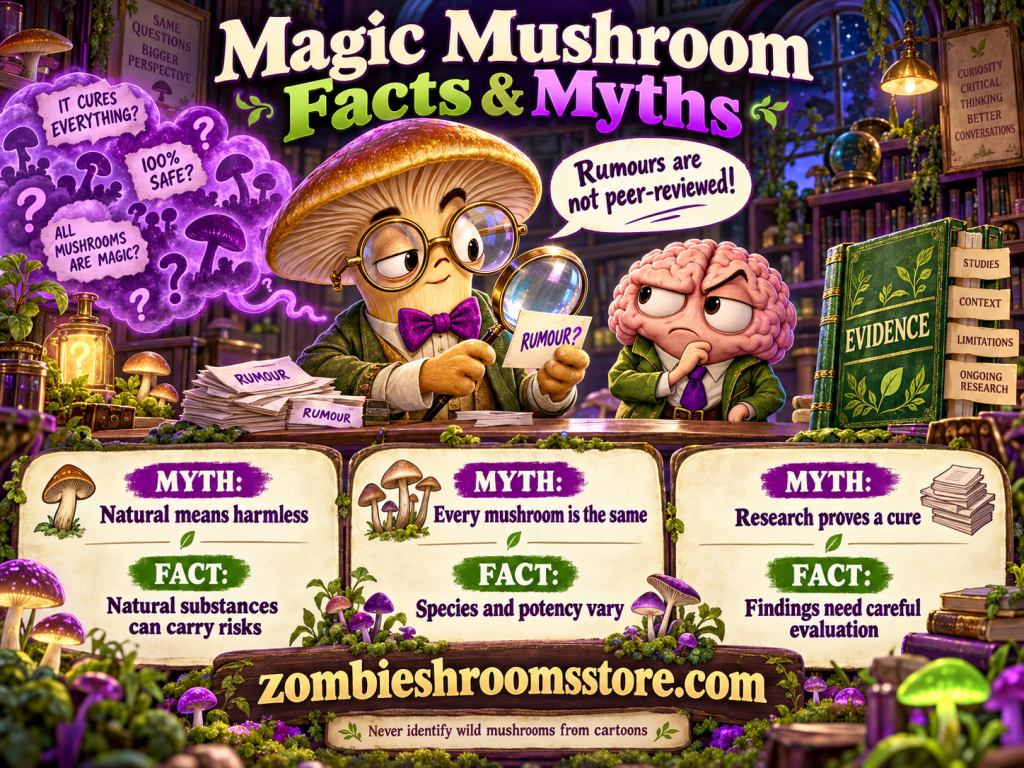
Magic mushrooms are one of the most talked-about and least understood substances in Canada. Between headlines about psilocybin clinical trials, viral social posts about mushroom gummies, and decades of cultural mythology, it can be genuinely hard to tell what is true and what is folklore. For Canadians curious about magic mushrooms, separating fact from fiction is the first step toward making informed, responsible decisions.
This guide walks through the most common magic mushroom facts and myths, explains what psilocybin actually does in the body and brain, and clarifies what beginners should understand before exploring psychedelic mushrooms.
What Are Magic Mushrooms, Really?
Magic mushrooms are fungi that contain psilocybin, a naturally occurring psychoactive compound. When ingested, psilocybin is converted by the body into psilocin, the molecule responsible for the perceptual and emotional effects people associate with a “trip.”
There are more than 180 known species of psilocybin-containing mushrooms worldwide, and several grow naturally in Canada. The most widely recognized is Psilocybe cubensis, which is also the species most commonly cultivated and studied. If you want a deeper breakdown of how these compounds interact, our guide on the science behind mushrooms and the human brain is a useful companion read.
Myth #1: Magic Mushrooms Are a Modern Discovery
Fact: Psilocybin mushrooms have been used for thousands of years. Archaeological evidence and historical records point to ceremonial use in Mesoamerican cultures, particularly among the Aztec and Mazatec peoples, long before European contact. The modern “discovery” of psilocybin by Western science only happened in the 1950s, when mycologist R. Gordon Wasson published his experiences in Mexico and chemist Albert Hofmann later isolated the compound.
In other words, magic mushrooms are not a recent trend. They are ancient tools that modern science is only now beginning to study systematically.
Myth #2: Psilocybin Makes You Hallucinate for Days
Fact: A psilocybin experience typically lasts between four and six hours, depending on dose, body weight, metabolism, and whether the mushrooms were eaten on an empty stomach. The most intense phase usually occurs in the first two to three hours, followed by a gradual comedown.
People do not remain in an altered state for days. However, some users report lingering shifts in mood, perspective, or emotional sensitivity for a day or two afterward. This is sometimes called an “afterglow” and is generally mild.
Myth #3: All Mushrooms That Look Psychedelic Are Safe
Fact: This is one of the most dangerous myths. Several toxic mushroom species closely resemble psilocybin varieties, and misidentification can cause serious illness or death. This is why foraging for wild mushrooms without expert guidance is strongly discouraged.
Even among cultivated psilocybin mushrooms, potency can vary significantly between species and even between individual fruits. Varieties like Penis Envy mushrooms are known for being notably potent, while others such as Golden Teacher are often described as more moderate. Understanding potency differences matters for anyone exploring these products.
Myth #4: Mushroom Gummies Are Basically Candy
Fact: Mushroom gummies are not candy, and they are not all the same. Some contain psilocybin or psilocin, some contain Amanita muscaria compounds, and some contain non-psychoactive functional mushroom extracts. The effects, risks, and legal status can differ dramatically depending on what is actually inside.
For Canadians exploring mushroom gummies, reading labels carefully and understanding the active ingredient is essential. Treating a psychedelic edible like a snack is a common beginner mistake that can lead to an overwhelming experience.
Myth #5: Psilocybin Is Addictive
Fact: Psilocybin is not considered physically addictive in the way opioids, alcohol, or nicotine are. It does not produce the same compulsive craving patterns, and there is no recognized withdrawal syndrome.
That said, psychological dependence is possible with any substance, and frequent use can lead to diminished effects due to rapid tolerance. Responsible use means respecting spacing between experiences and being honest about your motivations.
Myth #6: Everyone Has the Same Experience
Fact: Psilocybin experiences are highly individual. Factors like dose, mindset, setting, personal history, and even the specific mushroom variety all influence what happens. Two people can take similar amounts and have completely different journeys.
This is why experienced guides and researchers emphasize “set and setting” — your mental state and physical environment. It is also why beginners are encouraged to start with lower doses and avoid unfamiliar or chaotic environments.
What Psilocybin Actually Does in the Brain
Psilocybin primarily interacts with serotonin receptors, particularly the 5-HT2A receptor. This interaction alters communication between brain networks, which is why users often report changes in perception, sensory processing, and emotional awareness.
Modern neuroimaging studies suggest that psilocybin can temporarily increase connectivity between brain regions that do not normally communicate as directly. This may explain why some people describe insights, vivid imagery, or a sense of interconnectedness during a session.
Importantly, these effects are temporary. Psilocybin does not damage the brain, and current research has not found evidence of long-term cognitive harm in healthy adults when used responsibly.
Are Magic Mushrooms Legal in Canada?
This is where facts matter most. Psilocybin and psilocin are controlled substances under Canadian law. Possession, production, and distribution are generally illegal outside of specific exemptions.
However, Canada has become a global leader in psilocybin research and has granted limited exemptions for medical and therapeutic use in certain cases. Clinical trials are ongoing, and some patients have received legal access through Health Canada’s Special Access Program.
Because the legal landscape is evolving, Canadians should stay informed. Our detailed breakdown of psilocybin legality covers the current rules, exemptions, and what they mean in practice.
Myth #7: Microdosing Is Scientifically Proven to Boost Productivity
Fact: Microdosing — taking very small, sub-perceptual amounts of psilocybin — has become popular in Canada and abroad. Many users report improved focus, mood, or creativity. However, rigorous scientific evidence is still limited, and results from placebo-controlled studies have been mixed.
Microdosing is not a proven performance enhancer. It is an area of active research, and anyone considering it should approach claims with healthy skepticism.
Myth #8: You Need a Large Dose to Have a Meaningful Experience
Fact: Higher doses are not automatically better. Many people report profound or therapeutic experiences at moderate doses, while high doses can be overwhelming, especially for beginners.
Respect for the substance, careful dosing, and a safe environment matter far more than chasing intensity. This principle applies whether someone is exploring dried mushrooms, mushroom chocolates, or other formats.
Myth #9: Mushrooms and Cannabis Affect You the Same Way
Fact: Cannabis and psilocybin work on entirely different systems in the body. Cannabis primarily interacts with the endocannabinoid system, while psilocybin acts on serotonin receptors. The effects, duration, and risks are not comparable.
Some Canadians use both, but combining them can intensify or complicate an experience. Beginners should treat them as separate substances with separate considerations.
Myth #10: Psilocybin Is a Cure-All
Fact: While early research into psilocybin for depression, anxiety, PTSD, and end-of-life distress is promising, it is not a cure-all. Results vary, studies are ongoing, and psilocybin is not a replacement for professional mental health care.
Anyone considering psilocybin for therapeutic reasons should speak with a qualified healthcare provider and understand that research is still in progress.
What Beginners in Canada Should Keep in Mind
If you are new to psychedelic mushrooms, a few practical principles go a long way:
- Start low. Begin with a small dose to understand your sensitivity.
- Research your source. Know what you are consuming and where it came from.
- Understand the law. Psilocybin remains controlled in Canada outside specific exemptions.
- Respect set and setting. Your mindset and environment shape the experience.
- Avoid mixing substances. Combining psychedelics with alcohol or other drugs increases risk.
- Never use alone if you are inexperienced. A trusted, sober person can help if things feel overwhelming.
Education is not about encouraging use — it is about reducing harm and helping people make informed choices.
Frequently Asked Questions
Are magic mushrooms legal in Canada?
Psilocybin and psilocin are controlled substances in Canada. Possession and distribution are generally illegal, though limited exemptions exist for research and certain medical cases.
How long do magic mushrooms last?
Effects typically last four to six hours, with the most intense phase in the first two to three hours.
Can you overdose on psilocybin?
Psilocybin has a low toxicity profile, and fatal overdose from psilocybin alone is extremely rare. However, dangerous situations can arise from impaired judgment, mixing substances, or consuming misidentified mushrooms.
Are mushroom gummies the same as dried mushrooms?
Not necessarily. Gummies may contain psilocybin, Amanita compounds, or non-psychoactive ingredients. Always check the label and understand what you are consuming.
Do magic mushrooms show up on drug tests?
Standard drug tests usually do not screen for psilocybin, but specialized tests can detect it within a certain window after use.
Can psilocybin help with depression?
Early research is promising, but psilocybin is not an approved treatment for depression in Canada. Clinical trials are ongoing, and professional medical guidance is essential.
The Bottom Line
Magic mushrooms are neither the miracle cure some claim nor the dangerous menace others describe. They are powerful psychoactive fungi with real effects, real risks, and a growing body of scientific interest. For Canadians, the most valuable thing you can do is replace myths with facts.
Whether you are researching psilocybin out of curiosity, academic interest, or personal exploration, understanding the science, the law, and the cultural history will always serve you better than rumor. Stay informed, stay cautious, and treat these substances with the respect they deserve.