Psychedelics Education
Psilocybin Microdosing in Canada: What the Evidence, Risks, and Laws Mean for Beginners
Oct
Psilocybin microdosing in Canada is frequently described online as taking a very small amount of a psychedelic mushroom without experiencing a traditional psychedelic trip. Supporters sometimes associate the practice with improved mood, focus, creativity, or emotional flexibility. However, scientific evidence remains mixed, products can vary considerably, and Canadian law does not generally make psilocybin possession legal for personal use.
This guide explains the subject in plain language for Canadian beginners. It is educational information, not medical or legal advice. Anyone considering a psychedelic substance should speak with a qualified healthcare professional, especially if they take prescription medication or have a personal or family history of serious mental-health conditions.
What does microdosing psilocybin mean?
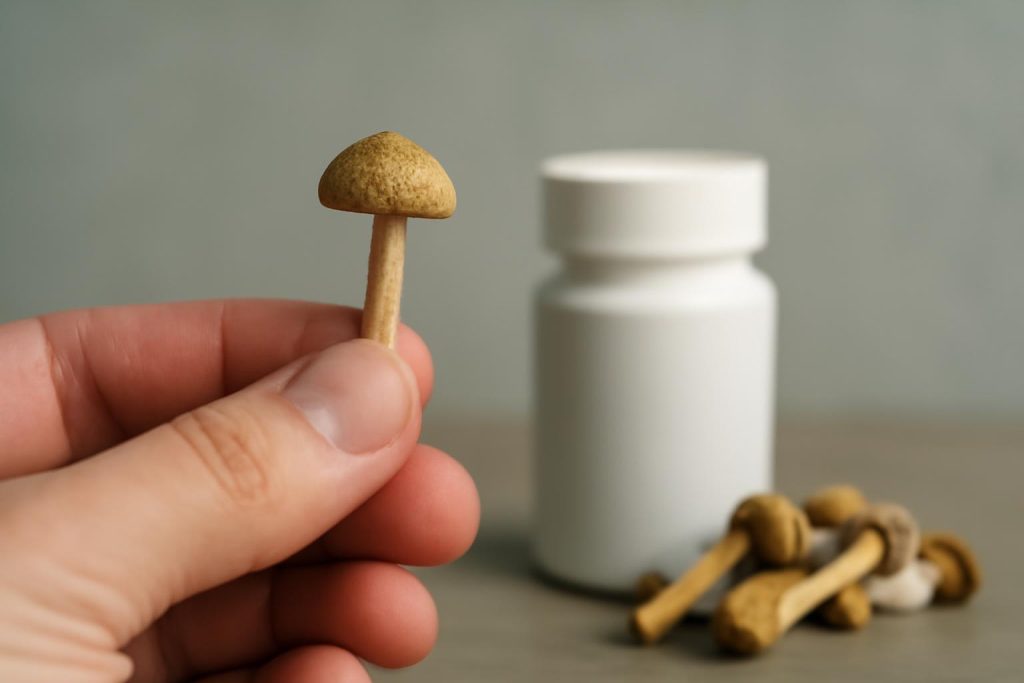
A microdose is commonly described as an amount intended to produce subtle or barely noticeable effects rather than strong visual changes, major alterations in perception, or a loss of normal functioning. With psilocybin mushrooms, the active compounds are primarily psilocybin and psilocin. The body converts psilocybin into psilocin, which interacts with serotonin receptors involved in perception, mood, and cognition.
Microdosing is different from a conventional psychedelic experience. A full psychedelic dose may produce pronounced changes in sensory processing, time perception, emotions, and thought patterns. A microdose is intended to remain below that threshold. In practice, the boundary is not precise because mushroom potency can vary between species, strains, individual mushrooms, growing conditions, storage methods, and preparations.
That variability is one reason online claims about a predictable “microdose” should be treated carefully. Two products that appear similar by weight may not contain the same concentration of active compounds. Edibles and capsules may introduce additional uncertainty when labels are incomplete, inaccurate, or based on an unverified formulation.
Why are Canadians interested in psilocybin microdosing?
Interest in microdosing has grown alongside broader public discussion about psychedelic research, mental health, workplace performance, and personal wellbeing. Some people are curious about whether small, non-intoxicating amounts could support concentration or creativity. Others are looking for alternatives after finding that conventional approaches have not met their expectations.
It is important to separate personal reports from clinical evidence. A person may genuinely feel more motivated or positive after microdosing, but that experience does not prove that psilocybin caused the change. Expectations, routine changes, sleep, social environment, and the placebo effect can all influence perceived results.
Some people also confuse microdosing with psychedelic-assisted therapy. These are not the same. Clinical psychedelic therapy generally involves screening, preparation, a controlled session, professional support, and follow-up care. Microdosing outside a clinical setting usually lacks those safeguards and has not been established as an approved treatment for depression, anxiety, addiction, or any other condition.
What does research say about microdosing?
Research into psilocybin and other psychedelics is expanding, but microdosing studies are still limited compared with research on conventional psychiatric treatments. Early observational studies and self-report surveys have described possible associations with mood, attention, creativity, or wellbeing. These findings are useful for generating research questions, but they cannot reliably establish cause and effect.
Controlled studies have produced a more complicated picture. When participants know or strongly suspect that they received psilocybin, expectations may influence how they rate mood, energy, or productivity. In blinded studies, the difference between an active microdose and a placebo has sometimes been smaller than participants expected.
This does not mean every reported benefit is imaginary. It means researchers are still determining which effects come from the drug, which come from expectations or behavioural changes, and which may depend on the individual or setting. Long-term safety is also not fully understood, particularly for frequent use over extended periods.
Microdosing is not a proven mental-health treatment
Research on larger, professionally supervised psilocybin sessions should not automatically be used to support unsupervised microdosing. A clinical trial may involve carefully selected participants, pharmaceutical-grade material, trained facilitators, medical monitoring, and strict follow-up. Those conditions are very different from using an online product at home.
Anyone experiencing persistent depression, anxiety, trauma symptoms, suicidal thoughts, or problems with substance use should seek professional care rather than relying on microdosing claims. In an immediate crisis, contact emergency services or a Canadian crisis-support resource in your province or territory.
Possible effects and limitations
Even at low amounts, psilocybin may affect people differently. Reported effects can include subtle changes in mood, sensory awareness, thought patterns, sociability, or concentration. Some people report no noticeable effect, while others experience more stimulation or emotional sensitivity than expected.
Possible unwanted effects may include anxiety, restlessness, nausea, headache, dizziness, confusion, sleep disruption, increased heart rate, or an uncomfortable shift in mood. A supposedly small amount can feel stronger when potency is unknown, when a person is sleep-deprived, or when the substance is combined with cannabis, alcohol, stimulants, or other drugs.
Psilocybin can also bring difficult emotions to the surface. Someone who is already stressed, frightened, or emotionally overwhelmed may find the experience harder to manage. A calm environment does not remove all risk, but it may reduce avoidable stressors.
Who should be especially cautious?
Extra caution is appropriate for anyone with a personal or family history of psychosis, schizophrenia, mania, or bipolar disorder. Psychedelics may worsen or trigger serious psychiatric symptoms in vulnerable individuals. People with uncontrolled cardiovascular conditions, seizure disorders, or other significant medical issues should discuss risks with a clinician before considering any psychedelic substance.
Medication interactions are another important concern. Psilocybin affects serotonin signalling, and combining it with antidepressants, stimulants, mood stabilizers, migraine medicines, or other substances may create unpredictable effects. The risks are not identical for every medication, so general internet advice is not a substitute for a pharmacist or physician.
Pregnant or breastfeeding people, minors, and individuals with a history of problematic substance use should avoid treating online microdosing content as a safe-use recommendation. “Natural” does not mean risk-free, and low-dose does not mean no-dose.
Product quality is a major Canadian concern
Outside regulated clinical or research settings, consumers may not know the precise identity, potency, or ingredients of a mushroom product. Dried mushrooms can vary naturally in strength. Gummies, chocolates, capsules, and other edibles may contain different active ingredients than their branding suggests. Some products marketed with terms such as “mushroom,” “functional mushroom,” or “psychedelic blend” may not contain psilocybin at all.
Misleading packaging can make it difficult to distinguish a product containing psilocybin from one containing non-psychoactive mushrooms, cannabis, amanita compounds, or an undisclosed mixture. A label alone is not proof of laboratory testing. Buyers should be cautious of guaranteed claims, promises of medical benefits, unclear ingredient lists, and products that do not identify a responsible manufacturer.
For general educational browsing, visitors can review the Zombie Shrooms Store home page and take time to understand how different product categories and formats are presented. Product information should never be interpreted as confirmation that a substance is legal, medically approved, or appropriate for a particular person.
Is psilocybin microdosing legal in Canada?
In Canada, psilocybin and psilocin are controlled substances under the federal Controlled Drugs and Substances Act. In general, unauthorized possession, production, importing, exporting, and trafficking can result in criminal consequences. Personal interest, wellness claims, or the belief that a dose is too small does not automatically create a legal exemption.
There are limited pathways connected with research, medical access, and exemptions. These are not blanket permissions for the public to buy, possess, or sell psilocybin. A clinical trial participant may be operating under an approved protocol, while a person granted an exemption has a specific authorization with defined limits.
Canadian laws and enforcement policies can change, and provincial or municipal rules may affect related activities. Before acting on information found online, consult current government guidance or a qualified Canadian lawyer. This article should not be used as a defence strategy or a substitute for legal advice.
How is microdosing different from cannabis use?
Canadians who already use marijuana sometimes compare cannabis and psilocybin because both can alter mood, perception, and sensory experience. They are pharmacologically different substances. Cannabis primarily interacts with the endocannabinoid system, while psilocin has important effects on serotonin receptors.
The subjective experience can also differ. Cannabis may influence relaxation, appetite, memory, time perception, and anxiety. Psilocybin may produce stronger changes in meaning, emotion, visual processing, and thought association. Combining the two can make effects more unpredictable and may increase confusion, anxiety, dizziness, or impairment.
Driving, cycling in traffic, operating machinery, swimming, or making important decisions after using either substance creates avoidable risk. A person who feels “mostly normal” may still have impaired attention or judgement.
Questions beginners should ask before believing a microdosing claim
- Is the claim based on a controlled study, a survey, or a personal testimonial?
- Was the product tested by an independent laboratory, and is the testing documentation verifiable?
- Does the claim promise to treat depression, trauma, addiction, ADHD, or another medical condition?
- Could sleep, exercise, therapy, reduced alcohol use, or other lifestyle changes explain the reported improvement?
- Are the legal restrictions in my province and country clearly understood?
- Have medication interactions and personal mental-health risks been discussed with a qualified professional?
These questions help separate education from marketing. A professional-looking website, attractive packaging, or confident social-media post does not guarantee quality, legality, or safety.
Where to learn more about mushrooms and psychedelics
Readers who want broader background can explore the site’s psychedelics education categories and review related articles through the blog post directory. Look for content that distinguishes scientific evidence from anecdotal experience and that acknowledges uncertainty rather than promising guaranteed outcomes.
The most responsible approach is to treat psilocybin microdosing as an emerging research topic, not an established wellness shortcut. Canadians should consider the legal status, product uncertainty, potential mental and physical risks, and lack of long-term evidence before making decisions. Anyone seeking help for a health condition should start with an appropriate healthcare professional.
Frequently asked questions
Does psilocybin microdosing make you hallucinate?
It is intended to produce subtle effects rather than a full psychedelic experience, but potency and individual sensitivity vary. A product sold as a microdose may still feel unexpectedly strong, especially when its contents are not independently verified.
Can microdosing psilocybin treat depression or anxiety?
There is not enough evidence to treat unsupervised microdosing as an established therapy. Clinical research is investigating psilocybin under controlled conditions, but those protocols should not be confused with self-directed use.
Is microdosing psilocybin legal in Canada?
Psilocybin and psilocin are controlled substances in Canada. Unauthorized possession and distribution can have legal consequences, and a small amount is not automatically exempt. Legal questions should be directed to a qualified Canadian legal professional.
Are psilocybin gummies safer than dried mushrooms?
Not necessarily. Gummies may have inconsistent labelling, undisclosed ingredients, or variable potency. Their sweet taste can also make accidental consumption more likely. Format alone does not establish safety or legality.
What is the safest first step for someone curious about microdosing?
The safest first step is informed discussion with a healthcare professional and careful review of current Canadian law. Avoid combining substances, never drive while impaired, and do not use online testimonials as a substitute for clinical guidance.